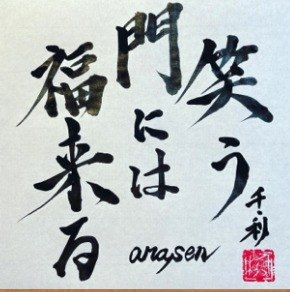
笑う門には福来る
warau kado ni wa fuku kitaru
Here is one of the happiest proverbs in Japanese: warau kado ni wa fuku kitaru (笑う門には福来る) – “good fortune comes to the home where people laugh.”
I’m Arasen, an elementary school principal and calligrapher in Japan. I try to live with a smile every day – and this proverb is the reason.
Quick Facts
| Japanese | 笑う門には福来る |
|---|---|
| Reading | わらうかどには ふくきたる |
| Romaji | warau kado ni wa fuku kitaru |
| Literally | To the gate of laughing people, fortune comes |
| Meaning | Happiness comes to cheerful people and homes. |
| English cousin | Laugh and grow fat. / Laughter is the best medicine. |
What Does It Mean?
Happiness naturally comes to a home where people live cheerfully and laugh a lot.
It also means: even in hard times, if you keep a bright heart, good things will come.
Word by Word
| 笑う | warau – to laugh |
|---|---|
| 門 | kado – gate; here it means “home” or “family” |
| には | ni wa – to, at |
| 福 | fuku – good fortune, happiness |
| 来る | kitaru – comes (an old way of saying kuru) |
Where Does It Come From?
In old Japanese, kado (門, gate) also meant the house and the family living there.
This proverb is one of the cards in iroha karuta, a traditional Japanese card game played at New Year, where each card shows a proverb. Children have learned it through play for a very long time.
A Word from Arasen

Good fortune naturally comes around to the homes of people who are always smiling. Even when there are painful, hard or sad things, if you live with bright hope, happiness will surely come.
Laughter makes you happy – and it brightens the people around you, too.
Let me share an American story that seems to prove this proverb.
The writer Norman Cousins became seriously ill with a disease of the spine and joints, and was told that he would probably not recover. To control the pain, he was given strong medicine.
Every time he took it, he felt as if his life was getting shorter. One day he decided: “If I can’t be cured anyway, I’ll stop the medicine that’s bad for my body – and live more joyfully.”
He stopped taking it, even when the pain came. Instead, every day he watched comedies and laughed out loud.
And then? Little by little, it began to work. The pain that had troubled him for so long slowly eased.
In a few weeks, the pain was gone and he had recovered a great deal. He wrote that both he and his doctor were amazed.
Laughter is good for the body – and can sometimes show this kind of power.
I always try to live with laughter.
(Translated from Arasen’s original Japanese.)
How to Use It
A Short Skit
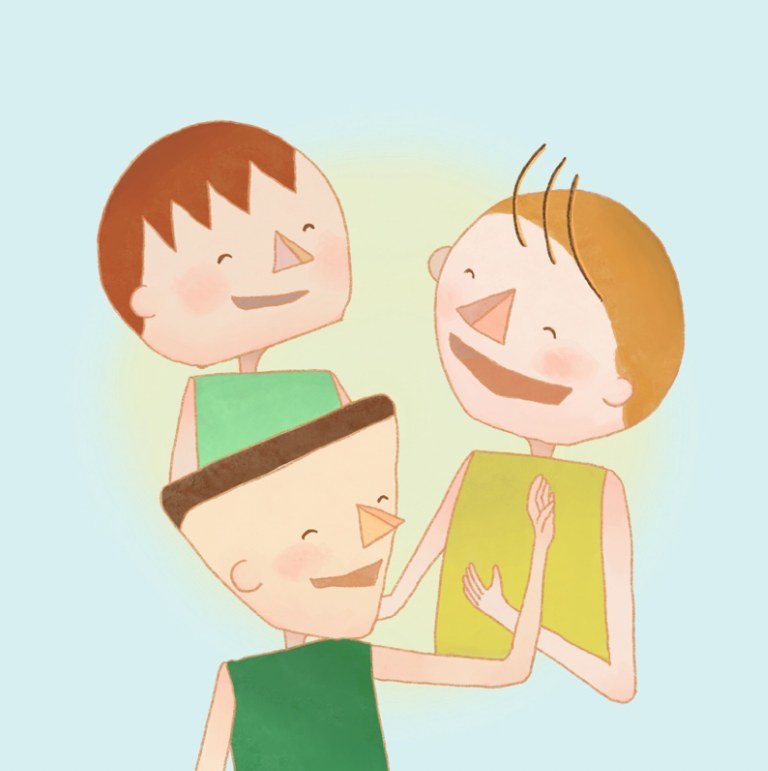
Sigh… this is so hard.
はぁ・・・。つらいわ。Ryosuke, when things are hard is exactly when we should cheer up and smile. You know – warau kado ni wa fuku kitaru!
亮介、つらい時こそ元気を出してニコニコしていこうや。笑う門には福来るっていうから。“Chan-chan” is the little “ta-da!” sound that closes a comedy skit in Japan.
Example Sentences
- Warau kado ni wa fuku kitaru – the cheerful family next door always has lots of visitors.
笑う門には福来るで、いつも明るいとなりの家には、人がたくさん集まってくる。 - Even if you fail, laugh it off. Warau kado ni wa fuku kitaru!
失敗しても笑いとばそう。笑う門には福来るだよ。
Similar Japanese Proverbs
- 笑う家に福来るWarau ie ni fuku kitaru
“Fortune comes to the laughing house.” Almost the same words. - 笑って損した者なしWaratte son shita mono nashi
“No one has ever lost anything by laughing.”
Similar Sayings in English
- Laugh and grow fat.
- Laughter is the best medicine.
Around the world: a Korean saying goes “Laugh and fortune comes,” and a Spanish one says “Whoever sings frightens away their troubles.”
Quick Quiz
How is 門 (gate) read in this proverb?
- A. kado
- B. mon
- C. to
Show the answer
The answer is A. kado. Here, kado means a home or family.
Free Worksheet for Teachers
Teaching Japanese? Download a free printable worksheet for this proverb – with the skit, a fill-in-the-blank, a quiz and a writing task (10 proverbs, A4, with answer key).