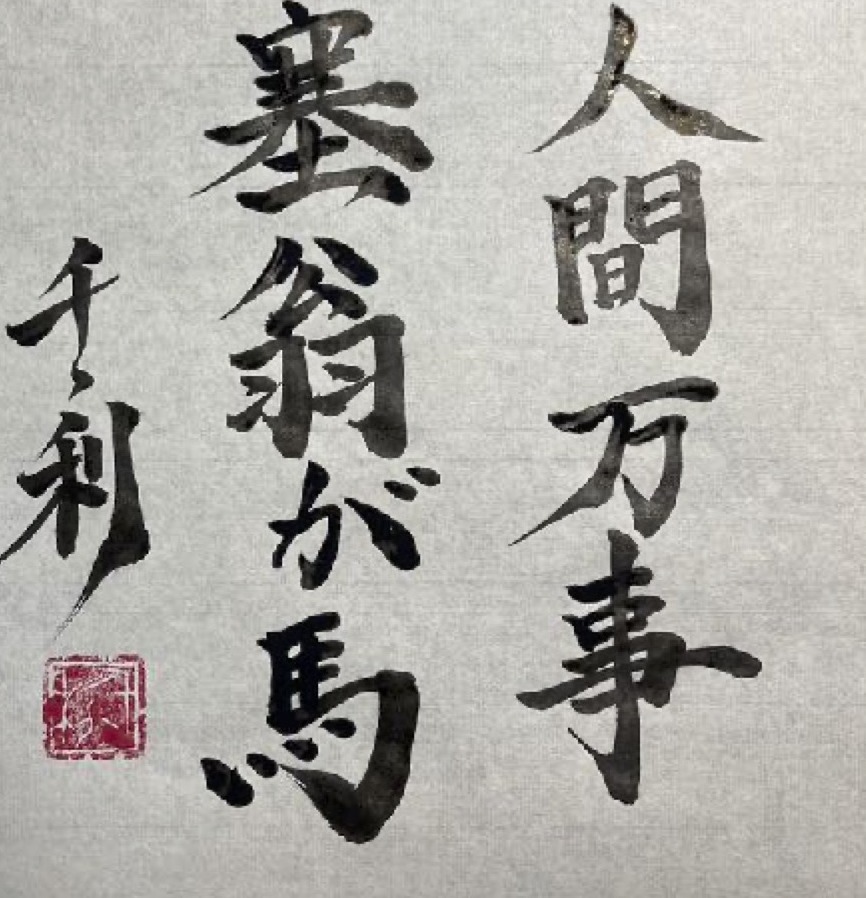
人間万事塞翁が馬
ningen banji saiō ga uma
Is it good luck or bad luck? Who knows! This is one of the wisest stories in East Asia: ningen banji saiō ga uma (人間万事塞翁が馬).
I’m Arasen, an elementary school principal and calligrapher in Japan. Whenever something bad happens, I remember this old man – and keep moving forward.
Quick Facts
| Japanese | 人間万事塞翁が馬 |
|---|---|
| Reading | にんげんばんじさいおうがうま |
| Romaji | ningen banji saiō ga uma |
| Literally | In the human world, everything is (like) the old frontier man’s horse |
| Meaning | You can never tell whether something will turn out lucky or unlucky. |
| Also read | 人間 can be read ningen or jinkan (“the world”) |
| English cousin | Every cloud has a silver lining. |
What Does It Mean?
In life, unexpected events can bring happiness or misfortune – no one can predict which. So don’t get too happy or too sad.
Word by Word
| 人間 | ningen / jinkan – the human world, life |
|---|---|
| 万事 | banji – everything |
| 塞翁 | Saiō – the old man (翁) of the frontier fortress (塞) |
| が馬 | ga uma – ’s horse |
Where Does It Come From?
The story comes from an ancient Chinese book (the Huainanzi). It is the story of an old man living near the frontier – read on below!
A Word from Arasen
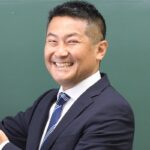
Here is the story behind it.
Long ago in China lived an old man called Saiō. One day his horse ran away. His neighbors felt sorry for him, but he said, “Maybe something good will come of it.”
Some time later, the horse came back – bringing a fine horse with it! When everyone celebrated, the old man said, “Maybe something bad will come of it.”
Then one day his son fell from the new horse and broke his leg. Terrible, right?
But later, when war broke out with a neighboring country, the son didn’t have to go to war because of his injury – and his life was saved.
Really, you never know how life will turn out. Good things don’t last forever, and bad things don’t either. I try to think, “Good and bad happen about half and half,” and keep moving forward.
(Translated from Arasen’s original Japanese.)
How to Use It
A Short Skit
I didn’t make the relay team for sports day… I’m so disappointed.
運動会のリレーのメンバーに入れなかった・・・。がっかりやわ・・・。But because of that, you were chosen as cheer captain – which runners can’t be! Ningen banji saiō ga uma.
おかげで、選手はなることができない応援団長に選ばれたやんか。人間万事塞翁が馬やで“Chan-chan” is the little “ta-da!” sound that closes a comedy skit in Japan.
Example Sentences
- I couldn’t play because of an injury – but that’s how I found another talent. Ningen banji saiō ga uma.
けがで試合に出られなかったが、そのおかげで別の才能に気づいた。人間万事塞翁が馬だ。 - Ningen banji saiō ga uma – don’t worry too much when bad things happen.
人間万事塞翁が馬というから、悪いことがあっても、くよくよしないでおこう。
Similar Japanese Proverbs
- 禍福は糾える縄の如しKafuku wa azanaeru nawa no gotoshi
“Fortune and misfortune are twisted together like a rope.” They take turns.
Similar Sayings in English
- Every cloud has a silver lining.
- Blessings in disguise.
Quick Quiz
In this proverb, what does 人間 (jinkan) mean?
- A. The human body
- B. The world, life
- C. Important people
Show the answer
The answer is B. Here, 人間 means the world we live in.
Watch the Lesson (in Japanese)
On my YouTube channel “Kyō kara tsukaeru kotowaza kōza” (Proverbs You Can Use from Today), I explain proverbs with short comedy skits. It’s in Japanese – a fun challenge for learners!
Free Worksheet for Teachers
Teaching Japanese? Download a free printable worksheet for this proverb – with the skit, a fill-in-the-blank, a quiz and a writing task (10 proverbs, A4, with answer key).