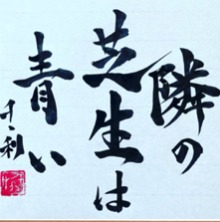
隣の芝生は青い
tonari no shibafu wa aoi
Ever looked at the next table in a restaurant and wished you had ordered that? Then you know tonari no shibafu wa aoi (隣の芝生は青い).
I’m Arasen, an elementary school principal and calligrapher in Japan. This one came to Japan from the West – so English speakers will recognize it right away!
Quick Facts
| Japanese | 隣の芝生は青い |
|---|---|
| Reading | となりのしばふはあおい |
| Romaji | tonari no shibafu wa aoi |
| Literally | The neighbor’s lawn is green |
| Meaning | Other people’s things always look better than our own. |
| English cousin | The grass is always greener on the other side of the fence. |
What Does It Mean?
Other people’s things always look better, and make us envious.
In Japanese, 青い (aoi, usually “blue”) is also used for the green of plants – like a “green” traffic light, which Japanese people call ao.
Word by Word
| 隣の | tonari no – next door, the neighbor’s |
|---|---|
| 芝生は | shibafu wa – the lawn |
| 青い | aoi – green (literally “blue”) |
Where Does It Come From?
The saying originally came from the West. The neighbor’s lawn always looks greener and fresher than your own.
Japanese adopted it – with a fun twist of language, since aoi means both blue and green.
A Word from Arasen

“The ice cream that kid is eating looks tastier.” “That one looks better.” Ever had that feeling? When really, it’s not that different from yours.
Sound familiar?
Other people’s things look better than our own – that’s the advice from people long ago.
When you feel envious of someone, remember this proverb.
And who knows – to someone else, the things you have might look enviable too!
(Translated from Arasen’s original Japanese.)
How to Use It
A Short Skit
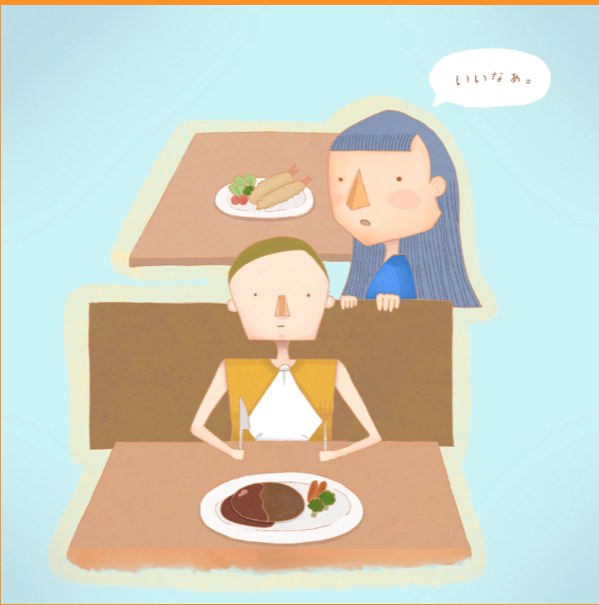
Mom, eating out is nice once in a while. This fried shrimp is delicious.
お母さん、たまには外食もいいね。エビフライ定食美味しいわ。Yes, it’s nice once in a while.
そうね、たまには外食もいいね。Mom, that hamburger steak at the other table looks good… maybe I should’ve ordered that. Oh, but the fried chicken over there looks good too…
お母さん、あっちのテーブルのハンバーグ美味しそうね。私、ハンバーグにすればよかったかな。でも、向こうのテーブルの唐揚げ定食も美味しそう。Nozomi, tonari no shibafu wa aoi – it just looks that way. Stop looking around and eat!
のぞみ、隣の芝生は青いから、そう見えるだけよ。周りばかり見てないで食べなさい。“Chan-chan” is the little “ta-da!” sound that closes a comedy skit in Japan.
Example Sentences
- My friend’s home always looks more fun – maybe that’s tonari no shibafu wa aoi.
友だちの家のほうが楽しそうに見えるのは、隣の芝生は青いということかもしれない。 - Envying the teacher of the other class is just tonari no shibafu wa aoi.
ほかのクラスの先生がうらやましくなるのも、隣の芝生は青いからだ。
Similar Japanese Proverbs
- 隣の花は赤いTonari no hana wa akai
“The neighbor’s flowers are redder.” Other people’s things always look better. - 内の米の飯より隣の麦飯Uchi no kome no meshi yori tonari no mugimeshi
“The neighbor’s barley rice over our own white rice.”
Similar Sayings in English
- The grass is always greener on the other side of the fence.
Quick Quiz
Which proverb has the same meaning?
- A. Tonari no hana wa akai (隣の花は赤い)
- B. Tōdai moto kurashi (灯台下暗し)
- C. Saru mo ki kara ochiru
Show the answer
The answer is A. “The neighbor’s flowers are redder” – the same idea.
Watch the Lesson (in Japanese)
On my YouTube channel “Kyō kara tsukaeru kotowaza kōza” (Proverbs You Can Use from Today), I explain proverbs with short comedy skits. It’s in Japanese – a fun challenge for learners!
Free Worksheet for Teachers
Teaching Japanese? Download a free printable worksheet for this proverb – with the skit, a fill-in-the-blank, a quiz and a writing task (10 proverbs, A4, with answer key).