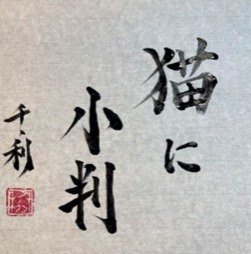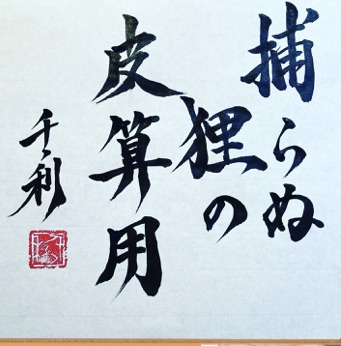
捕らぬ狸の皮算用
toranu tanuki no kawazan’yō
Planning how to spend prize money before you’ve won? Japanese people tease you with toranu tanuki no kawazan’yō (捕らぬ狸の皮算用).
I’m Arasen, an elementary school principal and calligrapher in Japan. And the tanuki in this proverb isn’t just any animal – in Japanese folklore, it’s a famous trickster!
Quick Facts
| Japanese | 捕らぬ狸の皮算用 |
|---|---|
| Reading | とらぬたぬきのかわざんよう |
| Romaji | toranu tanuki no kawazan’yō |
| Literally | Calculating the fur of a tanuki you haven’t caught |
| Meaning | Making plans based on things you don’t have yet. |
| English cousin | Don’t count your chickens before they hatch. |
What Does It Mean?
Counting on something uncertain, and making hopeful plans before you actually have it.
Word by Word
| 捕らぬ | toranu – not yet caught |
|---|---|
| 狸の | tanuki no – of a tanuki (raccoon dog) |
| 皮算用 | kawazan’yō – calculating (算用) the price of the fur (皮) |
Where Does It Come From?
Long ago, tanuki fur was used for expensive warm clothing. So a hunter might think, “If I catch a tanuki, I’ll make this much money!” – before even setting out.
But the hunt might fail. And in Japanese folklore, the tanuki is a shape-shifting trickster who fools humans – so good luck catching one!
A Word from Arasen

“How much New Year’s money will I get? I’ll buy this and that…” – and then it’s less than you hoped, and you’re disappointed. Ever happened to you?
Planning on something you don’t have yet – this proverb points out exactly that.
Long ago, tanuki fur made fine winter clothing. So people couldn’t help calculating, “If I catch a tanuki, I’ll get this much!” But the hunt doesn’t always succeed.
And besides, your opponent is the tanuki – famous for tricking people!
The proverb teaches the foolishness of counting your fur early, with a touch of humor.
(Translated from Arasen’s original Japanese.)
How to Use It
A Short Skit

A 300-million-yen jumbo lottery! If I win, first I’ll buy a house, then I’ll travel abroad…
3億円のジャンボ宝くじ。もし当たったら、まず家を購入して、その次に外国旅行に行って・・・Hey, hey – you haven’t even BOUGHT a ticket yet! That’s toranu tanuki no kawazan’yō.
おいおい、まだ宝くじを買ってすらないやん。まさに捕らぬ狸の皮算用やで“Chan-chan” is the little “ta-da!” sound that closes a comedy skit in Japan.
Example Sentences
- Thinking about how to spend the prize before you’ve even won is toranu tanuki no kawazan’yō.
まだ優勝していないのに、賞金の使い道を考えるなんて、捕らぬ狸の皮算用だ。 - Deciding what to buy before getting your New Year’s money is toranu tanuki no kawazan’yō.
お年玉をもらう前から買うものを決めるのは、捕らぬ狸の皮算用だよ。
Similar Japanese Proverbs
- 絵に描いた餅E ni kaita mochi
“A rice cake in a painting.” Something that looks great but isn’t real.
Similar Sayings in English
- Don’t count your chickens before they hatch.
- Don’t sell the bear’s skin before you’ve caught the bear.
An Arabic saying warns: “Don’t sell the fish while it’s still in the sea.”
Quick Quiz
Which English proverb has the same meaning?
- A. Don’t count your chickens before they hatch.
- B. Time is money.
- C. Walls have ears.
Show the answer
The answer is A. Don’t count on what you don’t have yet.
Watch the Lesson (in Japanese)
On my YouTube channel “Kyō kara tsukaeru kotowaza kōza” (Proverbs You Can Use from Today), I explain proverbs with short comedy skits. It’s in Japanese – a fun challenge for learners!
Free Worksheet for Teachers
Teaching Japanese? Download a free printable worksheet for this proverb – with the skit, a fill-in-the-blank, a quiz and a writing task (10 proverbs, A4, with answer key).