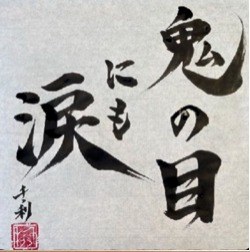
鬼の目にも涙
oni no me ni mo namida
When the strictest coach in school cries at the final game, Japanese people say oni no me ni mo namida (鬼の目にも涙).
I’m Arasen, an elementary school principal and calligrapher in Japan. The oni is the ogre of Japanese folklore – and this proverb shows that even it has a soft side.
Quick Facts
| Japanese | 鬼の目にも涙 |
|---|---|
| Reading | おにのめにもなみだ |
| Romaji | oni no me ni mo namida |
| Literally | Tears even in the eyes of an ogre |
| Meaning | Even a harsh person can be moved to compassion. |
| English cousin | Even the hardest heart can be moved. |
What Does It Mean?
Even a cold, harsh person sometimes shows a kind heart.
Word by Word
| 鬼の | oni no – of an ogre |
|---|---|
| 目にも | me ni mo – even in the eyes |
| 涙 | namida – tears |
Where Does It Come From?
The oni is an imaginary monster of Japanese folklore – with horns, fangs and a tiger-skin loincloth, very wild and very strong.
The proverb is said to come from the Edo period, when strict officials who collected heavy taxes were called oni. When one of them showed pity and eased the taxes, people said: “Even an oni has tears!”
A Word from Arasen

Even an ogre, feared by everyone, sometimes shows a kind heart and sheds tears. However scary or cold someone is, they can still feel pity or be moved.
This proverb is said to come from a scene in the Edo period. An official who collected high taxes from the local people was called an “oni.” When he felt sorry for them and eased the collection, people said, “Oni no me ni mo namida.”
When someone who’s usually strict starts crying, you might feel like crying too, right?
(Translated from Arasen’s original Japanese.)
How to Use It
A Short Skit
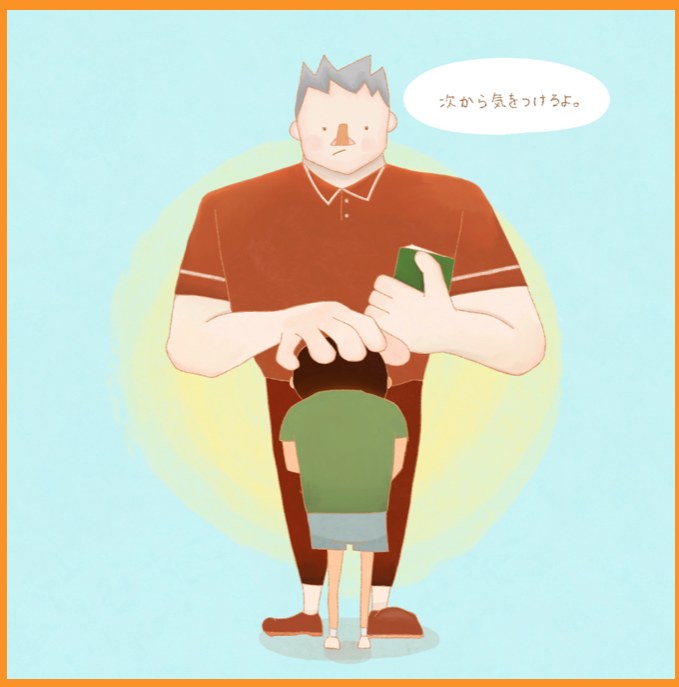
Hey Yusuke, guess what – strict Mr. Kagawa listened to Ryosuke’s reason for being late.
ねえねえ、勇輔くん、あの厳しい香川先生が亮介くんの遅刻の言い訳を聞いたんだって。Ryosuke’s family is going through a hard time right now. Mr. Kagawa heard why he was late and didn’t get angry? That’s oni no me ni mo namida.
亮介って今、家族が大変なんやろ。聞いたわ。亮介の遅刻の訳を聞いて、あの香川先生が怒らんかったんか。まさに鬼の目にも涙やなぁ“Chan-chan” is the little “ta-da!” sound that closes a comedy skit in Japan.
Example Sentences
- Our always-strict coach cried when we won the championship. Oni no me ni mo namida.
いつもきびしいコーチが、ぼくたちの優勝で泣いていた。鬼の目にも涙だ。 - Oni no me ni mo namida – even scary people have a kind heart.
鬼の目にも涙というように、こわい人にもやさしい心がある。
Similar Japanese Proverbs
- 鬼も頼めば人食わずOni mo tanomeba hito kuwazu
“Even an ogre won’t eat you if you ask nicely.”
Similar Sayings in English
- Even the hardest heart can be moved.
- Even tough guys cry.
There are many oni proverbs in Japanese – like oni ni kanabō, “an iron club for an ogre.”
Quick Quiz
What does oni no me ni mo namida mean?
- A. Ogres are crybabies
- B. You got dust in your eye
- C. Even a scary person can be kind
Show the answer
The answer is C. Even a cold person can be moved.
Watch the Lesson (in Japanese)
On my YouTube channel “Kyō kara tsukaeru kotowaza kōza” (Proverbs You Can Use from Today), I explain proverbs with short comedy skits. It’s in Japanese – a fun challenge for learners!
Free Worksheet for Teachers
Teaching Japanese? Download a free printable worksheet for this proverb – with the skit, a fill-in-the-blank, a quiz and a writing task (10 proverbs, A4, with answer key).