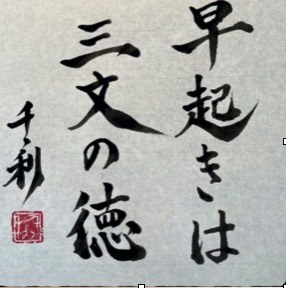
早起きは三文の徳
hayaoki wa sanmon no toku
The English say “the early bird catches the worm.” In Japanese, the early riser earns a few old coins: hayaoki wa sanmon no toku (早起きは三文の徳).
I’m Arasen, an elementary school principal and calligrapher in Japan. As someone who starts every day early, I can say: this one is true!
Quick Facts
| Japanese | 早起きは三文の徳 |
|---|---|
| Reading | はやおきはさんもんのとく |
| Romaji | hayaoki wa sanmon no toku |
| Literally | Early rising is worth three mon |
| Meaning | If you get up early, good things happen. |
| English cousin | The early bird catches the worm. |
What Does It Mean?
If you get up early in the morning, something good will happen.
It doesn’t promise a fortune – just a small but real benefit.
Word by Word
| 早起き | hayaoki – getting up early |
|---|---|
| は | wa – topic marker |
| 三文 | sanmon – three mon, a tiny amount of old Japanese money |
| の徳 | no toku – a benefit, a gain |
Where Does It Come From?
A mon (文) was an old Japanese coin of very small value. Three mon was just pocket change.
So the proverb says: get up early, and you’ll gain something – small, but real.
A Word from Arasen

When you get up early, a little something good happens.
You went to school earlier than usual, and the person you like was there – so you got to talk, just the two of you. Ever had a “little good thing” like that?
Getting up early is also said to be good for your health. Moving your body in the morning feels great.
By the way, do you know how much three mon is? In today’s money, it’s less than 100 yen. Just a little – but it’s something good.
(Translated from Arasen’s original Japanese.)
How to Use It
A Short Skit
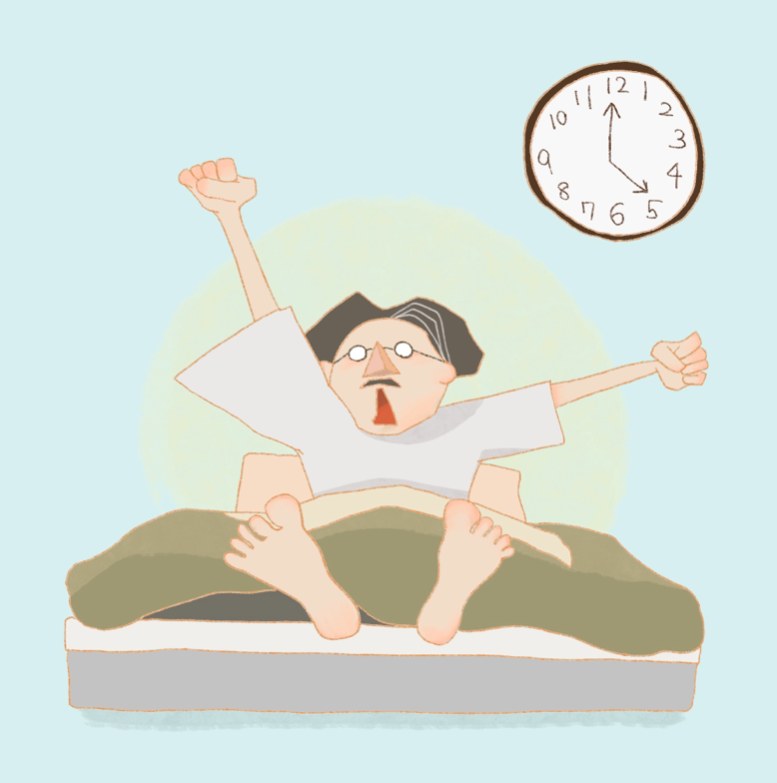
Good morning, Dad. Did you go somewhere this morning?
お父さん、おはよう。朝からどこかに行ってたの?Morning, Nozomi. I got up early and took a walk in the park. A beautiful bird flew right up to me, and I even got a photo!
のぞみ、おはよう。今朝、早く起きて公園を散歩していたら、綺麗な鳥が近くに飛んできてなぁ、写真も撮れたんやで。Dad, that’s hayaoki wa sanmon no toku!
お父さん、まさに早起きは三文の徳だね“Chan-chan” is the little “ta-da!” sound that closes a comedy skit in Japan.
Example Sentences
- I got up early for a walk and saw a beautiful sunrise. Hayaoki wa sanmon no toku.
早起きして散歩したら、きれいな朝日が見られた。早起きは三文の徳だ。 - Hayaoki wa sanmon no toku – let’s finish our homework in the morning.
早起きは三文の徳というから、朝に宿題をすませよう。
Similar Japanese Proverbs
- 朝起きは三文の徳Asaoki wa sanmon no toku
“Rising in the morning is worth three mon.” The same proverb with a different first word.
Similar Sayings in English
- The early bird catches the worm.
- Early to bed and early to rise makes a man healthy, wealthy and wise.
The word 徳 (toku) is sometimes written 得 (also toku, “profit”) – both are used.
Quick Quiz
How much money is “three mon” (三文)?
- A. Just a little
- B. A lot
- C. Exactly 30,000 yen
Show the answer
The answer is A. Just a little. A small gain – but a gain!
Watch the Lesson (in Japanese)
On my YouTube channel “Kyō kara tsukaeru kotowaza kōza” (Proverbs You Can Use from Today), I explain proverbs with short comedy skits. It’s in Japanese – a fun challenge for learners!
Free Worksheet for Teachers
Teaching Japanese? Download a free printable worksheet for this proverb – with the skit, a fill-in-the-blank, a quiz and a writing task (10 proverbs, A4, with answer key).