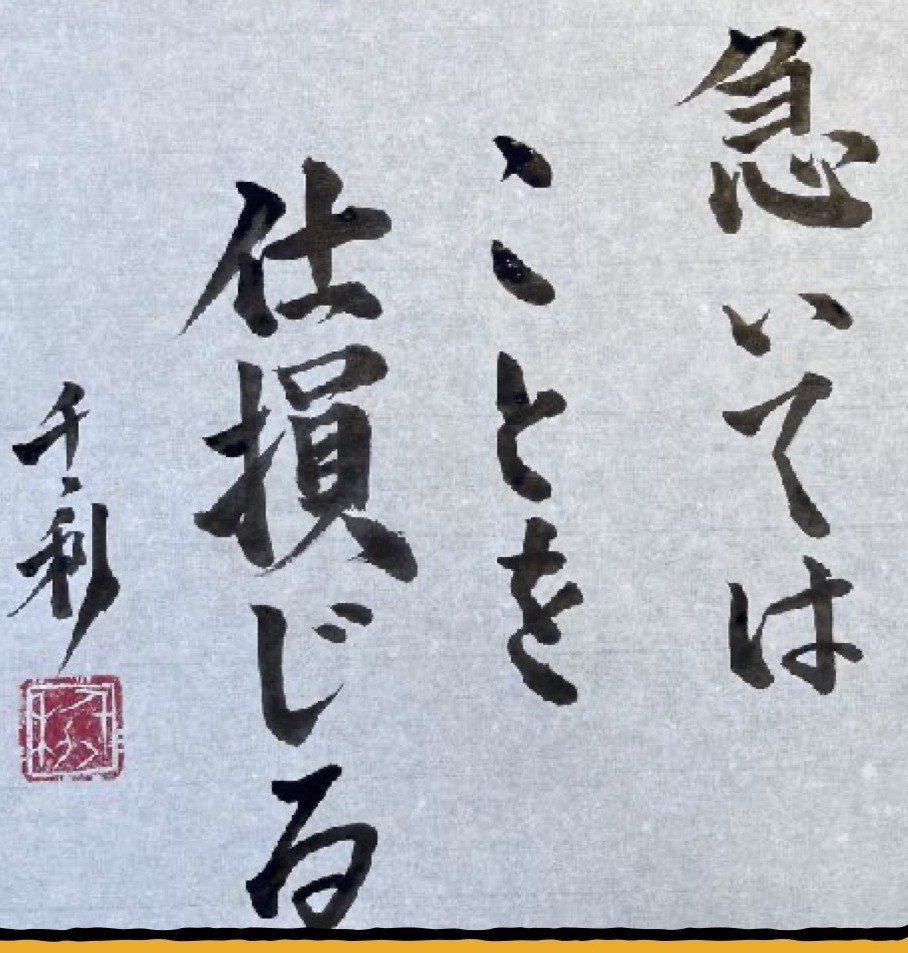
急いてはことを仕損じる
seite wa koto o shisonjiru
Running late, you put your shirt on backwards? Japanese has a proverb for that: seite wa koto o shisonjiru (急いてはことを仕損じる).
I’m Arasen, an elementary school principal and calligrapher in Japan. It’s the Japanese version of “haste makes waste” – and our skit shows that you can also overdo the calm part!
Quick Facts
| Japanese | 急いてはことを仕損じる |
|---|---|
| Reading | せいてはことをしそんじる |
| Romaji | seite wa koto o shisonjiru |
| Literally | If you hurry, you will botch the job |
| Meaning | Rushing leads to mistakes. |
| Opposite | 善は急げ (zen wa isoge) – “Do good things quickly” |
| English cousin | Haste makes waste. |
What Does It Mean?
If you try to do something in a hurry, you are likely to fail.
Word by Word
| 急いては | seite wa – if you hurry (from seku, an old word for “to rush”) |
|---|---|
| ことを | koto o – things, the task |
| 仕損じる | shisonjiru – to botch, to fail at |
Where Does It Come From?
The saying simply puts together “if you hurry” and “you will botch it.”
Note the reading: 急いて is read seite here, not isoide – from the old verb seku, to be in a rush.
A Word from Arasen

It’s never good to do things in a panic. If you rush, you’ll make mistakes – that’s what this proverb says.
So often, we could have done it if we stayed calm, but we failed because we were in a hurry.
“I’m going to be late!” – you throw on your clothes in a rush, and your shirt is on backwards. Ever happened to you?
So don’t panic – take a breath and do it calmly. That’s the lesson.
(Translated from Arasen’s original Japanese.)
How to Use It
A Short Skit
Yusuke, there’s a rare bug on this tree! Catch it, quick!
勇輔、この木の上にめずらしい虫がいるわ。早く取って!Nozomi, seite wa koto o shisonjiru. Let me get my bug net. Oh, and I’ll go to the bathroom first.
のぞみお姉ちゃん、急いてはことを仕損じるやで。虫取り網を用意するからちょっと待ってて。その前にトイレも行ってくる。Yusuke, you’re TOO calm!
勇輔、落ち着きすぎやろ“Chan-chan” is the little “ta-da!” sound that closes a comedy skit in Japan.
Example Sentences
- Seite wa koto o shisonjiru – check your answers before you hand in the test.
急いてはことを仕損じるというから、テストは見直してから出そう。 - I made it in a rush and it failed. Seite wa koto o shisonjiru.
あわてて作ったら失敗した。急いてはことを仕損じるだ。
Similar Japanese Proverbs
- 急がば回れIsogaba maware
“If you’re in a hurry, take the long way round.” The safe, sure way is faster in the end.
The Opposite
- 善は急げZen wa isoge
“Do good deeds quickly.” If it’s a good idea, act on it right away.
Similar Sayings in English
- Haste makes waste.
- More haste, less speed.
A Turkish proverb puts it this way: “The devil gets into hasty work.”
Quick Quiz
How do you read 急いては in this proverb?
- A. seite wa
- B. isoide wa
- C. kyūite wa
Show the answer
The answer is A. seite wa. Seku is an old word meaning to rush.
Watch the Lesson (in Japanese)
On my YouTube channel “Kyō kara tsukaeru kotowaza kōza” (Proverbs You Can Use from Today), I explain proverbs with short comedy skits. It’s in Japanese – a fun challenge for learners!
Free Worksheet for Teachers
Teaching Japanese? Download a free printable worksheet for this proverb – with the skit, a fill-in-the-blank, a quiz and a writing task (10 proverbs, A4, with answer key).