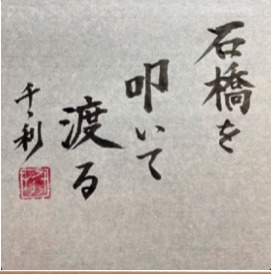
石橋をたたいて渡る
ishibashi o tataite wataru
Do you check your bag three times before a trip? Then you might be the kind of person Japanese people describe with ishibashi o tataite wataru (石橋をたたいて渡る).
I’m Arasen, an elementary school principal and calligrapher in Japan. It’s a compliment… mostly. Let me explain.
Quick Facts
| Japanese | 石橋をたたいて渡る |
|---|---|
| Reading | いしばしをたたいてわたる |
| Romaji | ishibashi o tataite wataru |
| Literally | Tapping a stone bridge, then crossing |
| Meaning | Being extremely careful before you act. |
| Opposite | 危ない橋を渡る (abunai hashi o wataru) – “to cross a dangerous bridge” |
| English cousin | Look before you leap. |
What Does It Mean?
To be careful on top of careful – checking that everything is safe before you take a step.
It can praise someone’s caution, or tease someone who is too cautious.
Word by Word
| 石橋 | ishibashi – a stone bridge |
|---|---|
| をたたいて | o tataite – tapping, knocking on |
| 渡る | wataru – to cross |
Where Does It Come From?
A stone bridge is about as strong as a bridge can be. Yet a very careful person still taps it to check that it’s safe – and only then starts to cross.
A Word from Arasen

Stone bridges are sturdy. There’s no way one is going to break while you’re on it and drop you into the river. You could cross it whistling!
And yet some people tap it carefully as they go – “Will it break…?” How much of a worrier are you?!
But there are times when that kind of caution matters. We live in a time when the unexpected happens. Nobody imagined that a new virus would throw the whole world into confusion.
I think of it as advice from people long ago: “Don’t take things lightly and assume it’ll be fine. Don’t forget to be careful.”
Still, being so careful that you can’t act at all is a problem too!
(Translated from Arasen’s original Japanese.)
How to Use It
A Short Skit
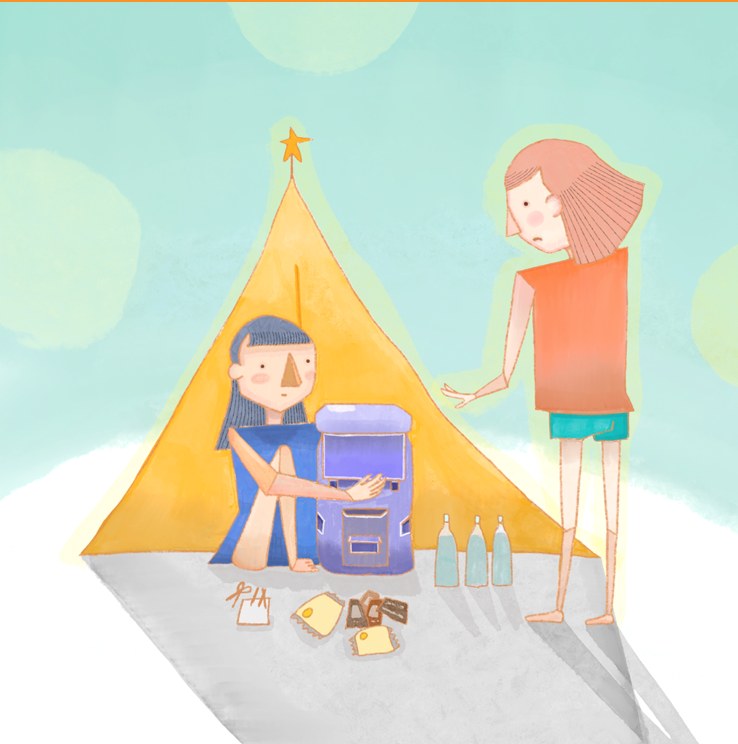
Nozomi, let’s hurry up and play in the park!
のぞみちゃん、早く公園で遊ぼうよ。Wait a minute, Miho. Let me put this in… and that too…
美保ちゃん、ちょっと待って。えっと、これと、あれも入れておこうNozomi, what are you doing?
のぞみちゃん、何してるの?I’m packing for our outing, Miho. Things we might need in an emergency!
美保ちゃん、遠足の用意しているのよ。いざというときのために必要なものを入れているのよNozomi, you don’t need this. You definitely don’t need a tent!
のぞみちゃん、これはいらんのちゃう。テントはいらんで。Miho, what are you saying? What if we get lost?!
美保、何言ってるの!もし、遭難したらどうするのよ?Nozomi, you really are the ishibashi o tataite wataru type…
のぞみちゃんって、石橋をたたいて渡る性格やな・・・(The next day) Huff… huff… Miho, please, carry my backpack!
(次の日)はぁはぁはぁ。美保、お願い、リュック持って!!See? I told you!
もう、だから言ったのに。“Chan-chan” is the little “ta-da!” sound that closes a comedy skit in Japan.
Example Sentences
- My brother is the ishibashi o tataite wataru type – he checks his luggage three times before every trip.
兄は石橋をたたいて渡る性格で、旅行の前には持ち物を三回も確認する。 - It’s an important match, so we made our plan as if to tap the stone bridge before crossing.
大事な試合なので、石橋をたたいて渡るつもりで作戦を立てた。
Similar Japanese Proverbs
- 転ばぬ先の杖Korobanu saki no tsue
“A walking stick before you fall.” Prepare in advance so you don’t fail. - 念には念を入れよNen ni wa nen o ireyo
“Add care on top of care.” Double-check everything.
The Opposite
- 危ない橋を渡るAbunai hashi o wataru
“To cross a dangerous bridge.” To knowingly take a risk.
Similar Sayings in English
- Look before you leap.
- Better safe than sorry.
Quick Quiz
Which proverb has a similar meaning to ishibashi o tataite wataru?
- A. Korobanu saki no tsue (a stick before you fall)
- B. Saru mo ki kara ochiru (even monkeys fall from trees)
- C. Inu mo arukeba bō ni ataru (a walking dog bumps into a stick)
Show the answer
The answer is A. Korobanu saki no tsue. Both are about being careful in advance.
Watch the Lesson (in Japanese)
On my YouTube channel “Kyō kara tsukaeru kotowaza kōza” (Proverbs You Can Use from Today), I explain proverbs with short comedy skits. It’s in Japanese – a fun challenge for learners!
Free Worksheet for Teachers
Teaching Japanese? Download a free printable worksheet for this proverb – with the skit, a fill-in-the-blank, a quiz and a writing task (10 proverbs, A4, with answer key).
Read More
- 50 Japanese Proverbs (Kotowaza) with Meanings – all in one place
- Seite wa Koto o Shisonjiru (急いてはことを仕損じる) – Haste Makes Waste
- Hayaoki wa Sanmon no Toku (早起きは三文の徳) – Getting Up Early Earns You Three Mon
- Chiri mo Tsumoreba Yama to Naru (ちりも積もれば山となる) – Even Dust, Piled Up, Becomes a Mountain
- 石橋をたたいて渡る(日本語の記事)
- ことわざ 目次(250+ proverbs in Japanese)