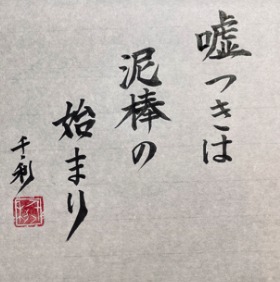
嘘つきは泥棒の始まり
usotsuki wa dorobō no hajimari
Almost every Japanese child has heard this from a parent at least once: usotsuki wa dorobō no hajimari (嘘つきは泥棒の始まり).
I’m Arasen, an elementary school principal and calligrapher in Japan. My own mother said it to me many times. Here’s what it means – and a ghost story to go with it.
Quick Facts
| Japanese | 嘘つきは泥棒の始まり |
|---|---|
| Reading | うそつきはどろぼうのはじまり |
| Romaji | usotsuki wa dorobō no hajimari |
| Literally | A liar is the beginning of a thief |
| Meaning | Getting used to lying leads to worse things. |
| Opposite idea | 嘘も方便 (uso mo hōben) – “a lie can be a useful tool” |
| English cousin | Show me a liar, and I will show you a thief. |
What Does It Mean?
A person who lies without guilt will soon feel no guilt about stealing either – so don’t tell lies.
Word by Word
| 嘘つき | usotsuki – a liar |
|---|---|
| 泥棒 | dorobō – a thief |
| の始まり | no hajimari – the beginning of |
Where Does It Come From?
This saying doesn’t come from any particular book. For generations, Japanese adults have used it to warn children.
The idea is simple: once you get used to lying, doing wrong stops feeling wrong – and that can lead to worse things, like stealing.
A Word from Arasen

When you start lying without a second thought, you soon stop thinking stealing is wrong, too. Lying is the first step onto a bad road – that’s the advice from people long ago.
I understand wanting to hide your own mistakes or the wrong things you did. But wait a moment.
Once you get used to lying, you’re in real trouble. When you stop feeling guilty and lie as a habit, that’s really dangerous. Thinking “it’s just a little lie” is a very scary thing.
When I was young and tried to cover things up with a lie, my mother would scold me every time: “Usotsuki wa dorobō no hajimari!” I still remember it.
(Translated from Arasen’s original Japanese.)
How to Use It
A Short Skit
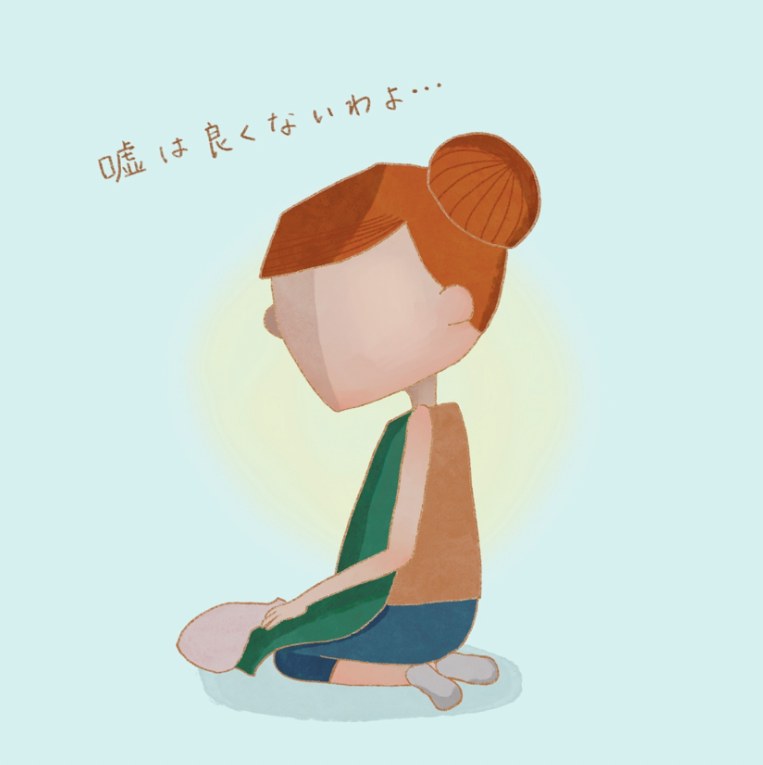
Nozomi, I saw a white ghost yesterday.
のぞみ、昨日、白いお化けを見たんよ。Kyoko, lying isn’t nice. Ghosts don’t exist.
今日子、うそいうのはよくないよ。この世にお化けなんて、おらへんねんから(A few days later) Nozomi, I saw the white ghost again last night.
(数日後)のぞみ、昨日も白いお化け見てしまってんKyoko, that’s enough! Usotsuki wa dorobō no hajimari!
今日子、ええ加減にしいよ。嘘つきは泥棒の始まりやでI’m not lying! Then come and stay at my house this weekend.
のぞみ、うそちゃうって!それじゃ、今週末にうちに泊まりにきてよ(That night) The door to Kyoko’s mom’s bedroom is open… let’s peek… AAAAAH! A ghost with a white face!
(お母さんの寝室の前)ちょっとのぞいてみよう・・。ぎゃあああああああ。白い顔のおばけ!!!Nozomi, how rude! I’m Kyoko’s mother. I was wearing a face mask for my skin.
のぞみちゃん、失礼よ。私は今日子のお母さんよ。お肌のパックをしていたのよ。Whaaat… so the white ghost was Kyoko’s mom!
えっ。白いお化けって、今日子のお母さんのことだったんだ“Chan-chan” is the little “ta-da!” sound that closes a comedy skit in Japan.
Example Sentences
- When my little brother lied that he had done his homework, Mom warned him: “Usotsuki wa dorobō no hajimari.”
宿題をやったとうそをついた弟に、母は「嘘つきは泥棒の始まりよ」と注意した。 - Even small lies stop feeling wrong if you keep telling them. Remember, usotsuki wa dorobō no hajimari.
小さなうそでも、くり返すうちに平気になる。嘘つきは泥棒の始まりというから気をつけよう。
The Opposite in Japanese
- 嘘も方便Uso mo hōben
“A lie can be a useful means.” Sometimes a lie is needed to make things go well.
Similar Sayings in English
- Show me a liar, and I will show you a thief.
- He that will lie will steal.
Quick Quiz
Which proverb expresses the opposite idea?
- A. Uso mo hōben (a lie can be useful)
- B. Ishi no ue ni mo sannen (three years on a stone)
- C. Neko ni koban (gold coins to a cat)
Show the answer
The answer is A. Uso mo hōben – the idea that a lie is sometimes necessary.
Watch the Lesson (in Japanese)
On my YouTube channel “Kyō kara tsukaeru kotowaza kōza” (Proverbs You Can Use from Today), I explain proverbs with short comedy skits. It’s in Japanese – a fun challenge for learners!
Free Worksheet for Teachers
Teaching Japanese? Download a free printable worksheet for this proverb – with the skit, a fill-in-the-blank, a quiz and a writing task (10 proverbs, A4, with answer key).
Read More
- 50 Japanese Proverbs (Kotowaza) with Meanings – all in one place
- Atama Kakushite Shiri Kakusazu (頭かくして尻かくさず) – Hide Your Head, Leave Your Tail Showing
- Kusai Mono ni Futa o Suru (くさいものにふたをする) – Put a Lid on What Stinks
- Kabe ni Mimi Ari, Shōji ni Me Ari (壁に耳あり障子に目あり) – Walls Have Ears, Paper Doors Have Eyes
- 嘘つきは泥棒の始まり(日本語の記事)
- ことわざ 目次(250+ proverbs in Japanese)