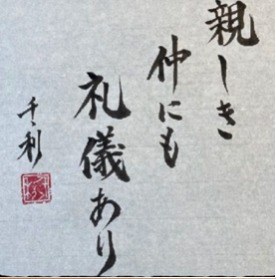
親しき仲にも礼儀あり
shitashiki naka ni mo reigi ari
Lent a book to a friend and never got it back? Japanese people would remind your friend: shitashiki naka ni mo reigi ari (親しき仲にも礼儀あり).
I’m Arasen, an elementary school principal and calligrapher in Japan. It’s one of the keys to understanding Japanese manners.
Quick Facts
| Japanese | 親しき仲にも礼儀あり |
|---|---|
| Reading | したしきなかにもれいぎあり |
| Romaji | shitashiki naka ni mo reigi ari |
| Literally | Even in a close relationship, there is courtesy |
| Meaning | Be polite even to people you’re close to. |
| English cousin | A hedge between keeps friendship green. |
What Does It Mean?
However close you are to someone, you must still keep good manners with them.
Word by Word
| 親しき仲 | shitashiki naka – a close relationship (shitashiki is old Japanese for shitashii, close) |
|---|---|
| にも | ni mo – even in |
| 礼儀 | reigi – courtesy, manners |
| あり | ari – there is |
Where Does It Come From?
As people get closer, they stop holding back – and a little too much freedom can hurt the other person and break the friendship.
Sayings with the same wisdom exist around the world, like Germany’s “Love your neighbor, but don’t tear down the fence.”
A Word from Arasen

However close you are, there are manners you should keep.
When you’re good friends, you stop being careful and holding back. But if it goes too far, it can cause a fight.
This is advice from people long ago: treat each other with respect.
Do you skip greetings with your parents or friends, or use rough words with them? Let’s not break our relationships with the people who matter most.
Even with someone very close, a small kind gesture makes them happy, doesn’t it?
(Translated from Arasen’s original Japanese.)
How to Use It
A Short Skit
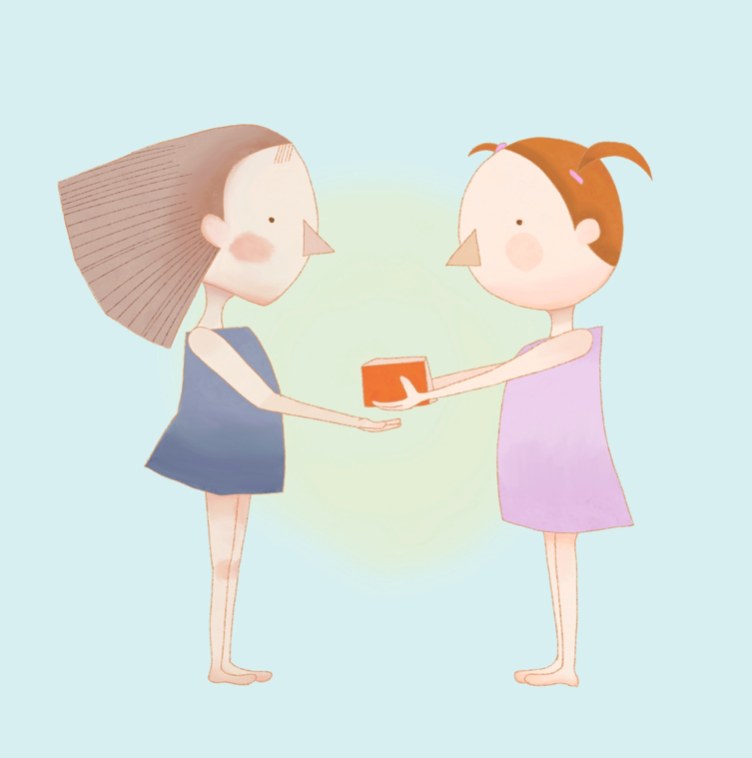
Nozomi, I lent a book to my friend… but I still haven’t got it back.
のぞみお姉ちゃん、友達に本を貸したんだけど・・・。全然返ってこないねんKanae, shitashiki naka ni mo reigi ari, right? Ask for it back. It’s better to be clear about borrowing and lending.
かなえ、親しき仲にも礼儀ありだよね。ちゃんと返してもらいなよ。貸し借りはきちんとしたほうがいいよ。“Chan-chan” is the little “ta-da!” sound that closes a comedy skit in Japan.
Example Sentences
- Shitashiki naka ni mo reigi ari – when you borrow something from a friend, say thank you and give it back.
親しき仲にも礼儀ありで、友だちに借りたものは、お礼を言って返そう。 - Even in a family, shitashiki naka ni mo reigi ari, so let’s say “thank you.”
家族でも、親しき仲にも礼儀ありだから「ありがとう」は言おう。
Similar Sayings in English
- A hedge between keeps friendship green.
- Good fences make good neighbors.
- Familiarity breeds contempt.
Around the world: “Even a good friend needs some distance” (Netherlands), “Even if it’s your aunt’s house, don’t go every day” (Spain, Mexico), “Even on your brother’s ferry, pay the fare” (Taiwan).
Quick Quiz
What does shitashiki naka ni mo reigi ari mean?
- A. Manners matter even with close friends
- B. Get along with your parents
- C. Make lots of friends
Show the answer
The answer is A. Even between close people, courtesy should be kept.
Watch the Lesson (in Japanese)
On my YouTube channel “Kyō kara tsukaeru kotowaza kōza” (Proverbs You Can Use from Today), I explain proverbs with short comedy skits. It’s in Japanese – a fun challenge for learners!
Free Worksheet for Teachers
Teaching Japanese? Download a free printable worksheet for this proverb – with the skit, a fill-in-the-blank, a quiz and a writing task (10 proverbs, A4, with answer key).
Read More
- 50 Japanese Proverbs (Kotowaza) with Meanings – all in one place
- Nasake wa Hito no Tame Narazu (情けは人のためならず) – Kindness Is Not Just for Others
- Sannin Yoreba Monju no Chie (三人寄れば文殊の知恵) – Three Heads Make the Wisdom of Monju
- Kaeru no Ko wa Kaeru (蛙の子は蛙) – The Child of a Frog Is a Frog
- 親しき仲にも礼儀あり(日本語の記事)
- ことわざ 目次(250+ proverbs in Japanese)