虎の威を借る狐
tora no i o karu kitsune
Do you know someone who acts tough only because a powerful friend is standing behind them? Japanese calls them tora no i o karu kitsune (虎の威を借る狐) – “the fox who borrows the tiger’s power.”
I’m Arasen, an elementary school principal and calligrapher in Japan. Behind it is a clever animal fable from ancient China.
Quick Facts
| Japanese | 虎の威を借る狐 |
|---|---|
| Reading | とらのいをかるきつね |
| Romaji | tora no i o karu kitsune |
| Literally | A fox that borrows the tiger’s authority |
| Meaning | A weak person bossing others around with someone else’s power. |
| Origin | Zhan Guo Ce (Strategies of the Warring States), ancient China |
| English cousin | an ass in a lion’s skin |
What Does It Mean?
A person with no power of their own who acts big by relying on someone powerful.
Word by Word
| 虎 | tora – a tiger |
|---|---|
| の威 | no i – the authority, the power of |
| を借る | o karu – borrowing (old Japanese for kariru) |
| 狐 | kitsune – a fox |
Where Does It Come From?
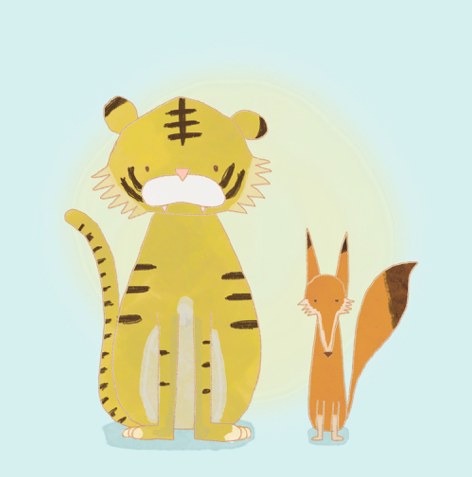
A tiger was about to eat a fox. The fox said, “I am a messenger of the gods – you’d better not eat me. If you don’t believe me, follow me. Every animal will run away.”
The tiger followed – and sure enough, every animal ran. But of course, they were running from the tiger, not the fox.
The story comes from an ancient Chinese book called Zhan Guo Ce.
A Word from Arasen

This proverb is about someone with no power of their own who uses other people’s power to bully those around them.
It comes from this old story from China: a tiger was about to attack a fox, and the fox said, “I’m a messenger of the gods, so you shouldn’t eat me. If you think I’m lying, follow me – every animal will run away.”
The tiger follows, and really, all the animals run away. Actually, they were just scared of the tiger. Chan-chan!
Well, this proverb is surely on the list of the “Top 10 proverbs nobody wants to be called”!
(Translated from Arasen’s original Japanese.)
How to Use It
A Short Skit
Since the class leader moved away, his sidekick hasn’t been very lively.
クラスのリーダーが引っ越して、あの子、元気ないなぁHe was so bossy before. He really was a tora no i o karu kitsune.
あんなに威張っていたのになぁ。まさに虎の威を借る狐やったんやなぁ“Chan-chan” is the little “ta-da!” sound that closes a comedy skit in Japan.
Example Sentences
- A little brother who acts tough because his big brother is strong is a tora no i o karu kitsune.
兄が強いからといっていばる弟は、虎の威を借る狐だ。 - Giving orders by using the teacher’s name? That’s tora no i o karu kitsune!
先生の名前を出して命令するなんて、虎の威を借る狐だよ。
Similar Sayings in English
- an ass in a lion’s skin
- to borrow someone else’s feathers
Aesop’s “donkey in a lion’s skin” is known in Greek, English, German, French and Italian. Nepal says: “Wearing a tiger’s skin, the jackal rules.”
Quick Quiz
Which country’s old book does this fable come from?
- A. China
- B. Japan
- C. France
Show the answer
The answer is A. China – from the ancient book Zhan Guo Ce.
Watch the Lesson (in Japanese)
On my YouTube channel “Kyō kara tsukaeru kotowaza kōza” (Proverbs You Can Use from Today), I explain proverbs with short comedy skits. It’s in Japanese – a fun challenge for learners!
Free Worksheet for Teachers
Teaching Japanese? Download a free printable worksheet for this proverb – with the skit, a fill-in-the-blank, a quiz and a writing task (10 proverbs, A4, with answer key).
Read More
- 50 Japanese Proverbs (Kotowaza) with Meanings – all in one place
- Saru mo Ki kara Ochiru (猿も木から落ちる) – Even Monkeys Fall from Trees
- I no Naka no Kawazu (井の中の蛙大海を知らず) – A Frog in a Well Knows Nothing of the Great Ocean
- Fukusui Bon ni Kaerazu (覆水盆に返らず) – Spilled Water Never Returns to the Tray
- 虎の威を借る狐(日本語の記事)
- ことわざ 目次(250+ proverbs in Japanese)