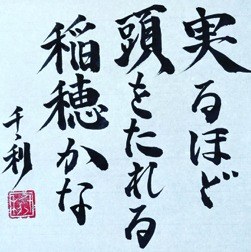
実るほど頭をたれる稲穂かな
minoru hodo kōbe o tareru inaho kana
In autumn, Japan’s rice fields turn gold, and the heavy ears of rice bend down. Japanese people see a lesson in that: minoru hodo kōbe o tareru inaho kana (実るほど頭をたれる稲穂かな).
I’m Arasen, an elementary school principal and calligrapher in Japan. It’s written like a haiku – and it’s one of my favorite proverbs about how to live.
Quick Facts
| Japanese | 実るほど頭をたれる稲穂かな |
|---|---|
| Reading | みのるほどこうべをたれるいなほかな |
| Romaji | minoru hodo kōbe o tareru inaho kana |
| Literally | The more it ripens, the more the ear of rice lowers its head |
| Meaning | The greater a person is, the humbler they are. |
| Reading tip | 頭 is read kōbe here – an old word for “head” |
| English cousin | The boughs that bear most hang lowest. |
What Does It Mean?
A truly excellent person doesn’t show off, but stays modest.
Word by Word
| 実るほど | minoru hodo – the more it ripens |
|---|---|
| 頭をたれる | kōbe o tareru – lowers its head, bows |
| 稲穂 | inaho – an ear of rice |
| かな | kana – “ah…”, a poetic ending used in haiku |
Where Does It Come From?
As rice ripens, the grains get heavy and the ear bends down, like a person bowing their head.
The ending kana is the sigh of a poet, as in classic haiku.
A Word from Arasen

Great people, the more others praise them, the more humble they become instead of acting big. They say, “It’s all thanks to everyone,” and stay modest.
The exact opposite of someone who leans back and says, “I’m the greatest!”
I’ve met many top-class people in my life, and every one of them was so humble it surprised me.
The less impressive people were, the more arrogant they acted.
Ears of rice get heavier and hang lower as the grains fill out. The proverb compares this to people.
(Translated from Arasen’s original Japanese.)
How to Use It
A Short Skit
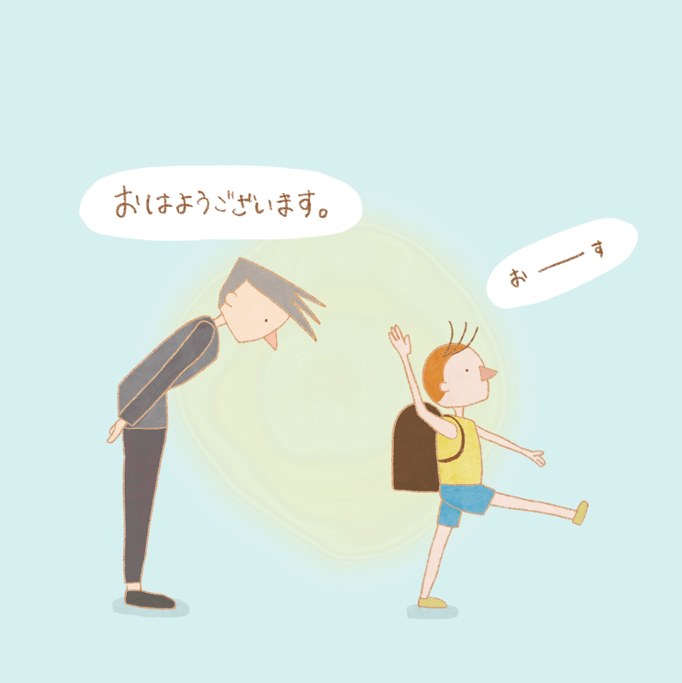
Good morning, Yusuke. Have a safe day!
勇輔さん、おはようございます。気をつけて行ってきてください!Good morning! I’m off.
おじさん、おはようございます。行ってきます(A few seconds later) Yusuke, that man just now is the president of a huge company. Minoru hodo kōbe o tareru inaho kana – he doesn’t act big at all. I really respect him.
(数秒後)勇輔、さっきのおじさんさ、大会社の社長さんなんだって。実るほど頭を垂れる稲穂かな、で、全然威張らないで謙虚で尊敬できるよなぁ“Chan-chan” is the little “ta-da!” sound that closes a comedy skit in Japan.
Example Sentences
- Such a famous teacher, yet polite to everyone. Minoru hodo kōbe o tareru inaho kana.
あんなにえらい先生なのに、だれにでもていねいだ。実るほど頭をたれる稲穂かなだね。 - The player who wins and says “It’s thanks to everyone” is the ear of rice that bows lowest.
優勝しても「みんなのおかげです」と言う選手は、実るほど頭をたれる稲穂かなだ。
Similar Japanese Proverbs
- 能ある鷹は爪をかくすNō aru taka wa tsume o kakusu
“A skilled hawk hides its claws.” Truly able people don’t show off.
Similar Sayings in English
- The boughs that bear most hang lowest.
- Still waters run deep.
Mongolia says: “The wise are modest, and great rivers flow calmly.” Korea: “A cat hides its claws.”
Quick Quiz
How is 頭 read in this proverb?
- A. atama
- B. kashira
- C. kōbe
Show the answer
The answer is C. kōbe – an old word for “head.”
Watch the Lesson (in Japanese)
On my YouTube channel “Kyō kara tsukaeru kotowaza kōza” (Proverbs You Can Use from Today), I explain proverbs with short comedy skits. It’s in Japanese – a fun challenge for learners!
Free Worksheet for Teachers
Teaching Japanese? Download a free printable worksheet for this proverb – with the skit, a fill-in-the-blank, a quiz and a writing task (10 proverbs, A4, with answer key).
Read More
- 50 Japanese Proverbs (Kotowaza) with Meanings – all in one place
- Saru mo Ki kara Ochiru (猿も木から落ちる) – Even Monkeys Fall from Trees
- I no Naka no Kawazu (井の中の蛙大海を知らず) – A Frog in a Well Knows Nothing of the Great Ocean
- Fukusui Bon ni Kaerazu (覆水盆に返らず) – Spilled Water Never Returns to the Tray
- 実るほど頭をたれる稲穂かな(日本語の記事)
- ことわざ 目次(250+ proverbs in Japanese)