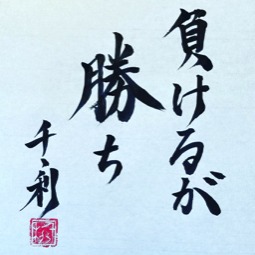
負けるが勝ち
makeru ga kachi
Arguing with someone you love? Japanese wisdom says: let them win. Makeru ga kachi (負けるが勝ち) – “losing is winning.”
I’m Arasen, an elementary school principal and calligrapher in Japan. I even made it part of my marriage vows. Let me tell you why.
Quick Facts
| Japanese | 負けるが勝ち |
|---|---|
| Reading | まけるがかち |
| Romaji | makeru ga kachi |
| Literally | Losing is winning |
| Meaning | Giving way can bring a better result in the end. |
| English cousin | Yielding is sometimes the best way of succeeding. |
What Does It Mean?
If you don’t fight to the end but let the other person win, you often come out ahead in the end.
Word by Word
| 負ける | makeru – to lose |
|---|---|
| が | ga – (here) is |
| 勝ち | kachi – a win, victory |
Why Does It Sound So Strange?
This proverb is a famous paradox: it sounds wrong at first, but it’s actually true.
Japanese has other paradox proverbs too, like shippai wa seikō no moto (failure is the root of success) and isogaba maware (if you’re in a hurry, go the long way round).
A Word from Arasen

Don’t force a fight. Give the other person the win, and in the end it turns out better for you – that’s advice from people long ago.
For example, in an argument with your girlfriend, even if you have a point, you don’t fight – you just say, “I’m sorry.” Then she’s in a good mood again, and she’ll listen to what you want too.
That’s far better than insisting on winning right now and ending up on bad terms.
When my wife and I got married, we made a few “marriage vows.” One of them was: “If we fight, I will apologize first.” So whenever we argue, I’m always the one who says “sorry” first.
Giving up a win is hard – that’s exactly why you should remember this proverb and master makeru ga kachi!
(Translated from Arasen’s original Japanese.)
How to Use It
A Short Skit
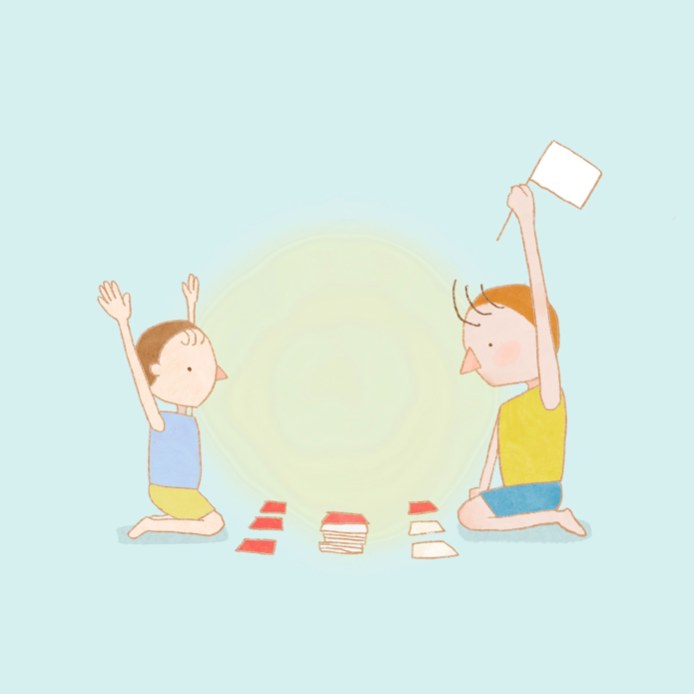
Yusuke, you lost a card game to Koji, the kindergartner?
勇輔、カードゲームで幼稚園児のコウジくんに負けたの?If I keep winning, Koji starts crying and it’s a big mess. It’s makeru ga kachi.
勝ってばかりだと、コウジ君が泣き出して大変やからね。負けるが勝ちっていうやつやわ。“Chan-chan” is the little “ta-da!” sound that closes a comedy skit in Japan.
Example Sentences
- We were about to fight, so I apologized first. Makeru ga kachi.
けんかになりそうだったので、先にあやまった。負けるが勝ちだ。 - As they say, makeru ga kachi – sometimes giving way works out better.
負けるが勝ちというように、ゆずったほうが結果的にうまくいくこともある。
Similar Japanese Proverbs
- 逃げるが勝ちNigeru ga kachi
“Running away is winning.” Avoiding a fight is often the smart choice.
Similar Sayings in English
- Yielding is sometimes the best way of succeeding.
- Lose the battle, win the war.
- to pick your battles
Germany says: “The wiser one gives way.” Spain: “The one who loses wins.”
Quick Quiz
What does makeru ga kachi mean?
- A. A loss counts as a win
- B. It’s fine to lose any game
- C. Giving way can bring a better result in the end
Show the answer
The answer is C. Not insisting on winning now can lead to a better result.
Watch the Lesson (in Japanese)
On my YouTube channel “Kyō kara tsukaeru kotowaza kōza” (Proverbs You Can Use from Today), I explain proverbs with short comedy skits. It’s in Japanese – a fun challenge for learners!
Free Worksheet for Teachers
Teaching Japanese? Download a free printable worksheet for this proverb – with the skit, a fill-in-the-blank, a quiz and a writing task (10 proverbs, A4, with answer key).
Read More
- 50 Japanese Proverbs (Kotowaza) with Meanings – all in one place
- Ryoyaku wa Kuchi ni Nigashi (良薬は口に苦し) – Good Medicine Tastes Bitter
- Kobo Fude o Erabazu (弘法筆を選ばず) – Kobo Doesn’t Choose His Brush
- Oni no Me ni mo Namida (鬼の目にも涙) – Even an Ogre Has Tears in Its Eyes
- 負けるが勝ち(日本語の記事)
- ことわざ 目次(250+ proverbs in Japanese)