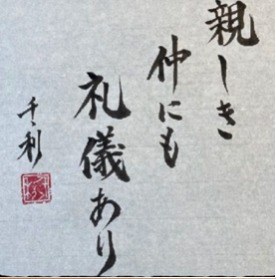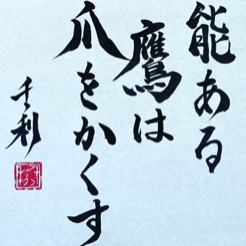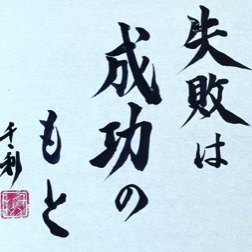
失敗は成功のもと
shippai wa seikō no moto
Failed a test? Lost a match? Your plant died? Japanese children are encouraged with shippai wa seikō no moto (失敗は成功のもと).
I’m Arasen, an elementary school principal and calligrapher in Japan. It’s one of the most positive proverbs in Japanese – and almost every country has its own version.
Quick Facts
| Japanese | 失敗は成功のもと |
|---|---|
| Reading | しっぱいはせいこうのもと |
| Romaji | shippai wa seikō no moto |
| Literally | Failure is the origin of success |
| Meaning | Learning from failure leads to success. |
| English cousin | Failure teaches success. |
What Does It Mean?
Even if you fail, if you find out why and reflect on it, you will succeed next time.
Word by Word
| 失敗 | shippai – failure |
|---|---|
| 成功 | seikō – success |
| のもと | no moto – the source, the root of |
Where Does It Come From?
It grew out of a simple lesson: if you think about why you failed and change your way, the failure becomes the start of your next success.
Similar sayings exist all over the world – “Failure is the mother of success” in Korea, China and Mongolia; “You learn by making mistakes” in France.
A Word from Arasen

Even if you fail, if you look into what went wrong and use it next time, you will surely succeed. It’s a super-positive proverb.
Everyone feels down after failing at something. At times like that, this proverb cheers you up.
Thanks to failing, you can think, “That way doesn’t work,” and “Next time I’ll try this.” That’s how you get closer to success.
Made a mistake in a soccer match? Failed at work? Think “shippai wa seikō no moto” and use it next time!
Once this feels natural, you can try even bigger things.
Edison, the “King of Inventors,” is said to have said: “I have not failed. I’ve just found ways that won’t work.” So cool!
People who achieved great things failed again and again. This proverb makes life richer.
(Translated from Arasen’s original Japanese.)
How to Use It
A Short Skit
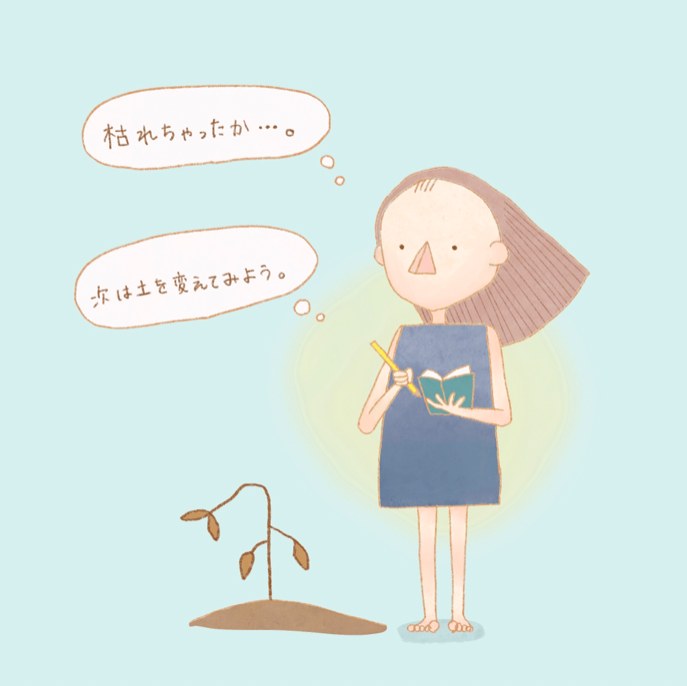
Dad, I wanted to grow watermelons in the garden, but it didn’t work.
お父さん、庭でスイカを育てたいんだけど、うまくいかなかってんI see, Kanae. Shippai wa seikō no moto. Why not think about the reason and plant them again?
そうか、かなえ、失敗は成功のもと、原因を考えてもう一回植えて見たらどうやI will! I’ll look up how to grow them in a book and try again.
そうするよ。本で育て方を調べて、もう一回チャレンジしてみるよ“Chan-chan” is the little “ta-da!” sound that closes a comedy skit in Japan.
Example Sentences
- The experiment failed, but shippai wa seikō no moto. Let’s find the cause and try again.
実験は失敗したが、失敗は成功のもと。原因を調べてもう一度やろう。 - They say shippai wa seikō no moto, so the questions you got wrong are the most important ones.
失敗は成功のもとというから、まちがえた問題こそ大事にしよう。
Similar Japanese Proverbs
- 七転び八起きNanakorobi yaoki
“Fall seven times, get up eight.” Never give up, however many times you fail.
Similar Sayings in English
- Failure teaches success.
- Failure is the mother of success.
- We learn from our mistakes.
Around the world: “Loss makes you wise” (Germany), “Loss and shame make a person wise” (Netherlands), “Every hardship deepens understanding” (Tibet).
Quick Quiz
What does shippai wa seikō no moto mean?
- A. Do nothing, so you never fail
- B. Learn from failure, and it leads to success
- C. After success comes failure
Show the answer
The answer is B. Reflect on a failure and use it, and it becomes the root of your next success.
Watch the Lesson (in Japanese)
On my YouTube channel “Kyō kara tsukaeru kotowaza kōza” (Proverbs You Can Use from Today), I explain proverbs with short comedy skits. It’s in Japanese – a fun challenge for learners!
Free Worksheet for Teachers
Teaching Japanese? Download a free printable worksheet for this proverb – with the skit, a fill-in-the-blank, a quiz and a writing task (10 proverbs, A4, with answer key).