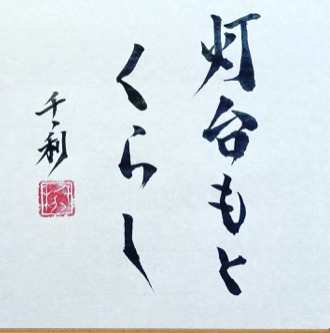
灯台もと暗し
tōdai moto kurashi
Ever searched everywhere for your glasses – while they were on your head? Japanese has the perfect proverb: tōdai moto kurashi (灯台もと暗し).
I’m Arasen, an elementary school principal and calligrapher in Japan. Most people think tōdai means “lighthouse.” It doesn’t – let me explain.
Quick Facts
| Japanese | 灯台もと暗し |
|---|---|
| Reading | とうだいもとくらし |
| Romaji | tōdai moto kurashi |
| Literally | The base of the lamp stand is dark |
| Meaning | We often miss what’s right in front of us. |
| Watch out | Tōdai here is an old oil-lamp stand, not a lighthouse |
| English cousin | The darkest place is under the candlestick. |
What Does It Mean?
Things that are very close to us are often the hardest to notice.
Word by Word
| 灯台 | tōdai – an old-fashioned lamp stand (today the word also means “lighthouse”) |
|---|---|
| もと | moto – the base, the foot |
| 暗し | kurashi – is dark (old Japanese for kurai) |
Where Does It Come From?
Until the Edo period, Japanese homes were lit by a tōdai: a tall stand with a dish of oil and a burning wick on top.
The flame lit up the whole room – but right underneath, the dish cast a shadow, and it was dark.
A Word from Arasen

Have you ever looked everywhere for something, only to find it was right next to you?
You’re searching for your handkerchief, and someone says, “It’s right there!”
Things close to us are actually hard to notice – that’s what we call tōdai moto kurashi.
The tōdai here is not the lighthouse by the sea.
It’s a candle or lamp stand that was used until the Edo period.
It lights up the room, but the spot right under the stand is in shadow and hard to see.
(Translated from Arasen’s original Japanese.)
How to Use It
A Short Skit
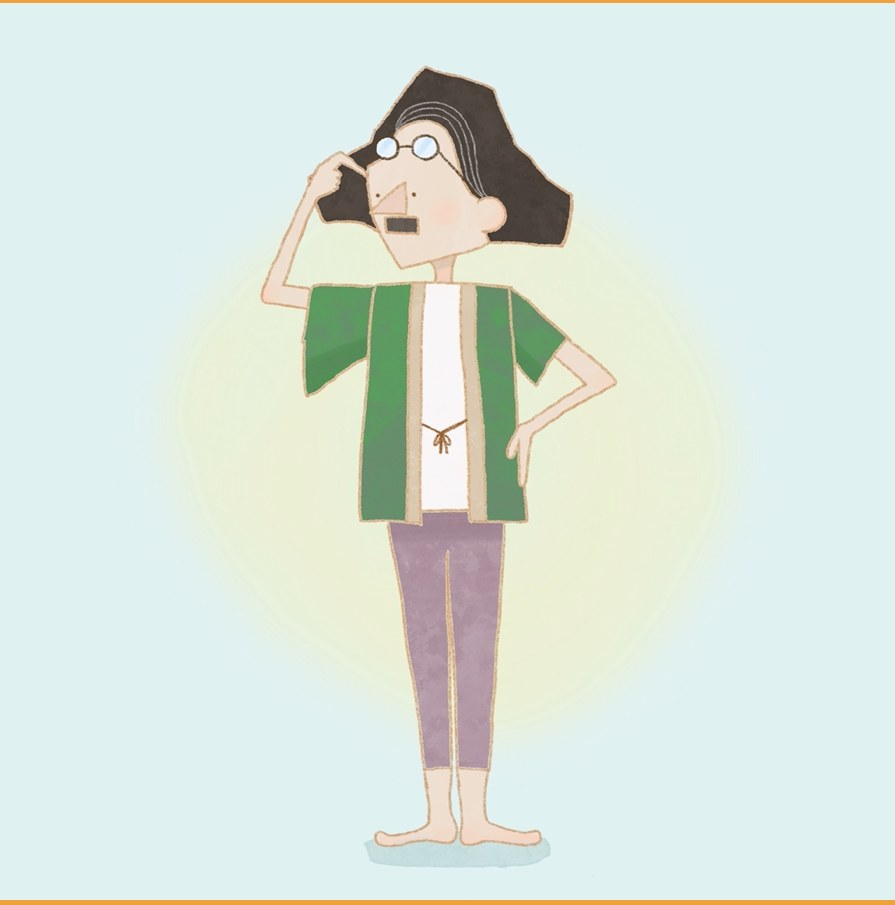
Nozomi, have you seen Dad’s glasses?
のぞみ、お父さんのメガネ知らんか?No! Dad, you’re always looking for your glasses. You should decide where to put them… wait, wait, Dad – they’re on your head!
知らんよ。もう、お父さん、いつもメガネ探してるやん。ちゃんと置くとこ決めとかないと…。えっ、えっ、お父さん、メガネ、頭にかかってるやんWhoa, there they are!
わぁ、ここにあったんか。Dad, that’s tōdai moto kurashi!
お父さん、まさに灯台もと暗しやで。“Chan-chan” is the little “ta-da!” sound that closes a comedy skit in Japan.
Example Sentences
- The glasses I was looking for were on top of my own head. Tōdai moto kurashi.
さがしていたメガネが、自分の頭の上にあった。灯台もと暗しだ。 - I never knew there was such a beautiful flower field on the road I walk every day. Tōdai moto kurashi!
毎日通っている道に、こんなにきれいな花畑があったとは。灯台もと暗しだね。
Similar Sayings in English
- The darkest place is under the candlestick.
- You can’t see the wood for the trees.
- It’s right under your nose.
Quick Quiz
What is the tōdai in this proverb?
- A. A lighthouse by the sea
- B. A temple tower
- C. An old lamp stand that lit up rooms
Show the answer
The answer is C. The old lamp stand was dark right underneath – that’s where the proverb comes from.
Watch the Lesson (in Japanese)
On my YouTube channel “Kyō kara tsukaeru kotowaza kōza” (Proverbs You Can Use from Today), I explain proverbs with short comedy skits. It’s in Japanese – a fun challenge for learners!
Free Worksheet for Teachers
Teaching Japanese? Download a free printable worksheet for this proverb – with the skit, a fill-in-the-blank, a quiz and a writing task (10 proverbs, A4, with answer key).