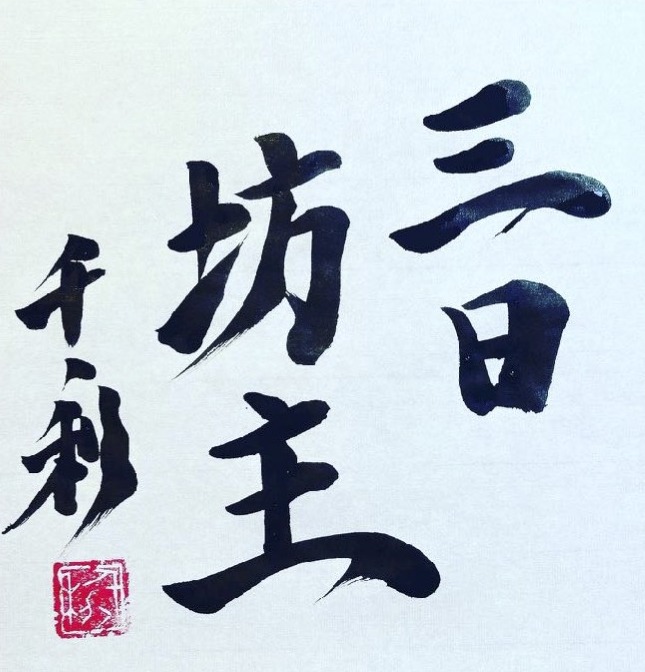
三日坊主
mikka bōzu
New Year’s resolutions, a new diary, a new exercise plan… and three days later? In Japan, you’d be called a mikka bōzu (三日坊主) – a “three-day monk.”
I’m Arasen, an elementary school principal and calligrapher in Japan. But I have a different view of three-day monks. Read to the end!
Quick Facts
| Japanese | 三日坊主 |
|---|---|
| Reading | みっかぼうず |
| Romaji | mikka bōzu |
| Literally | A three-day Buddhist monk |
| Meaning | Someone who quits everything quickly. |
| Opposite | 石の上にも三年 (ishi no ue ni mo sannen) – “three years on a stone” |
| English cousin | Soon hot, soon cold. |
What Does It Mean?
A person who gets bored easily and never sticks with anything for long.
Word by Word
| 三日 | mikka – three days |
|---|---|
| 坊主 | bōzu – a Buddhist monk |
Where Does It Come From?
In the Edo period, people whose business failed or who couldn’t make a living sometimes ran to a temple to become monks – temples gave them meals and a place to sleep.
But a monk’s training is hard: very early mornings, long sutras to learn. Many gave up after just three days and quietly ran away – and so people who quit quickly came to be called “three-day monks.”
A Word from Arasen

A mikka bōzu is someone who gets bored and quits whatever they do. Someone who can’t keep anything going.
In the Edo period, people who failed in business or fell on hard times would run to a temple to become monks. If you trained at a temple, they fed you and gave you a place to sleep.
But training to be a monk is hard and strict. Mornings are early, and reading sutras isn’t easy. If you come with a half-hearted attitude, you can’t bear it. Many of them gave up within three days and sneaked out of the temple.
Here’s what I think: being a three-day monk is fine!
Three days of trying means three days of moving forward, three days of growing. Don’t feel bad – be proud of yourself. Be a three-day monk again and again. Repeat it 10 times and that’s a month. Repeat it 100 times and that’s ten months! The person who keeps deciding to try again, without giving up, wins. Let’s do it!
(Translated from Arasen’s original Japanese.)
How to Use It
A Short Skit
Seiichi, go and walk the dog.
誠一、犬の散歩に行きなさいよ。But I want to watch YouTube…
YouTube観たいのに・・・。You said you’d walk the dog yourself. Don’t be a mikka bōzu – get up early every day!
犬の散歩は自分がやるって言ったんやから、三日坊主にならないように、毎日早起きしなさいよ。“Chan-chan” is the little “ta-da!” sound that closes a comedy skit in Japan.
Example Sentences
- I started keeping a diary, but I was a mikka bōzu.
日記を書き始めたけれど、三日坊主で終わってしまった。 - This year I won’t be a mikka bōzu – I’ll keep jumping rope every morning!
今年こそ三日坊主にならないよう、毎朝のなわとびを続けるぞ。
The Opposite in Japanese
- 石の上にも三年Ishi no ue ni mo sannen
“Three years on a stone.” If you keep at it patiently, it will pay off.
Similar Sayings in English
- Soon hot, soon cold.
- a quitter
Many English speakers would simply say “I gave up after three days” – Japanese packs that into two words!
Quick Quiz
Which proverb has the opposite meaning of mikka bōzu?
- A. Ishi no ue ni mo sannen (three years on a stone)
- B. Sannin yoreba monju no chie (three heads are better than one)
- C. Hayaoki wa sanmon no toku (early rising brings three coins)
Show the answer
The answer is A. Ishi no ue ni mo sannen – keep going, and it will pay off.
Watch the Lesson (in Japanese)
On my YouTube channel “Kyō kara tsukaeru kotowaza kōza” (Proverbs You Can Use from Today), I explain proverbs with short comedy skits. It’s in Japanese – a fun challenge for learners!
Free Worksheet for Teachers
Teaching Japanese? Download a free printable worksheet for this proverb – with the skit, a fill-in-the-blank, a quiz and a writing task (10 proverbs, A4, with answer key).
Read More
- 50 Japanese Proverbs (Kotowaza) with Meanings – all in one place
- Suki Koso Mono no Jōzu Nare (好きこそものの上手なれ) – What You Love, You Get Good At
- Shippai wa Seikō no Moto (失敗は成功のもと) – Failure Is the Root of Success
- Me kara Uroko ga Ochiru (目から鱗が落ちる) – The Scales Fall from Your Eyes
- 三日坊主(日本語の記事)
- ことわざ 目次(250+ proverbs in Japanese)