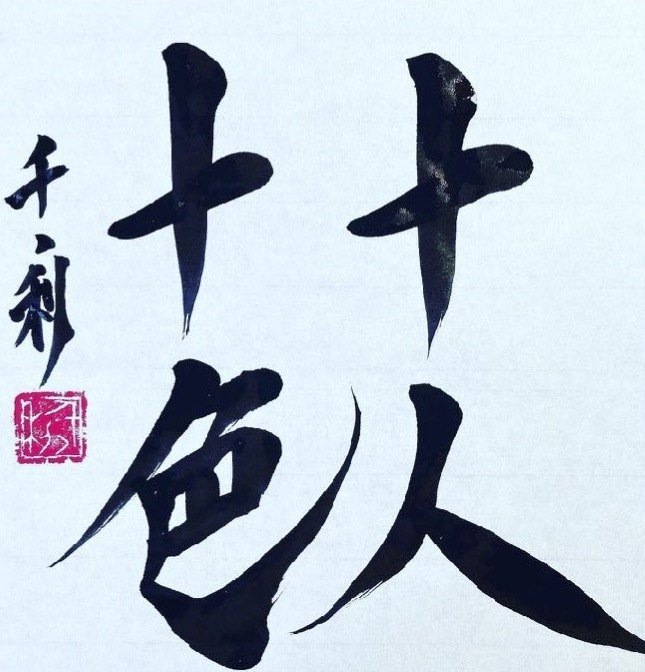
十人十色
jū-nin to-iro
“Ten people, ten colors” – isn’t that a beautiful way to say that everyone is different? Jūnin toiro (十人十色) is a four-character idiom that every Japanese child knows.
I’m Arasen, an elementary school principal and calligrapher in Japan. After teaching hundreds of children, I can tell you: this one is true!
Quick Facts
| Japanese | 十人十色 |
|---|---|
| Reading | じゅうにんといろ |
| Romaji | jū-nin to-iro |
| Literally | Ten people, ten colors |
| Meaning | Everyone has different tastes and ideas. |
| Type | Four-character idiom (四字熟語, yoji-jukugo) |
| English cousin | So many men, so many minds. / To each their own. |
What Does It Mean?
Just as everyone looks different, everyone has their own tastes and ways of thinking.
It is used in a positive way: different opinions are natural – and that’s what makes the world interesting.
Word by Word
| 十人 | jū-nin – ten people |
|---|---|
| 十色 | to-iro – ten colors (十 is read to here, an old reading; iro = color) |
Where Does It Come From?
Put ten people together, and you will find ten different “colors” – ten different likes, dislikes and ideas.
The idiom is built like a little poem: “ten people” and “ten colors” side by side. The word for “color” (iro) is also used in Japanese for someone’s character or style.
A Word from Arasen

When ten people get together, each one thinks differently and likes different things. People’s ideas and tastes are all different.
There’s a similar saying, “People’s hearts are like their faces” – just as every face is a little different, so is what each person thinks.
“Hyakunin hyakuyō” (a hundred people, a hundred ways) also means everyone is different.
As these proverbs say, there are all kinds of people in the world – and that’s what makes it fun, isn’t it?
I have been homeroom teacher to 525 children so far.
They were all lovely – and not a single one was the same. Truly jūnin toiro. Their tastes and ideas were all different, and that’s exactly why it was so much fun.
(Translated from Arasen’s original Japanese.)
How to Use It
A Short Skit
The new exhibition at the art museum seems to be getting mixed reviews.
美術館で最近始まった展覧会、評価はさまざまみたいやなぁ。So I hear. Even a single artwork – how people feel about it is jūnin toiro. Of course opinions are divided!
そうらしいなぁ。たった一つの作品でも、受け取り方は十人十色やもん。評価が分かれるのは当然やわ。“Chan-chan” is the little “ta-da!” sound that closes a comedy skit in Japan.
Example Sentences
- When we asked everyone their favorite school lunch, the answers were jūnin toiro.
給食で好きなメニューを聞いたら、十人十色の答えが返ってきた。 - Even after reading the same book, people’s thoughts are jūnin toiro.
同じ本を読んでも、感想は十人十色だ。
Similar Japanese Proverbs
- 蓼食う虫も好き好きTade kuu mushi mo sukizuki
“Some bugs even like to eat bitter smartweed.” There’s no accounting for taste! - 百人百様Hyakunin hyakuyō
“A hundred people, a hundred ways.” The same idea, ten times bigger.
Similar Sayings in English
- So many men, so many minds.
- To each their own.
Quick Quiz
How do you read 十色 in jūnin toiro?
- A. to-iro
- B. jū-iro
- C. too-shoku
Show the answer
The answer is A. to-iro. Ten people have ten different tastes and ideas.
Watch the Lesson (in Japanese)
On my YouTube channel “Kyō kara tsukaeru kotowaza kōza” (Proverbs You Can Use from Today), I explain proverbs with short comedy skits. It’s in Japanese – a fun challenge for learners!
Free Worksheet for Teachers
Teaching Japanese? Download a free printable worksheet for this proverb – with the skit, a fill-in-the-blank, a quiz and a writing task (10 proverbs, A4, with answer key).
Read More
- 30 Japanese Proverbs (Kotowaza) with Meanings – all in one place
- Neko ni Koban (猫に小判) – Gold Coins to a Cat
- Hyakubun wa Ikken ni Shikazu (百聞は一見にしかず) – Seeing Once Beats Hearing a Hundred Times
- Tonari no Shibafu wa Aoi (隣の芝生は青い) – The Neighbor’s Lawn Is Greener
- 十人十色(日本語の記事)
- ことわざ 目次(250+ proverbs in Japanese)