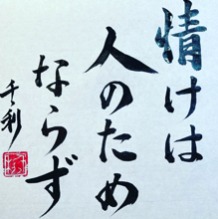
情けは人のためならず
nasake wa hito no tame narazu
Here is a proverb that even many Japanese people get wrong! Nasake wa hito no tame narazu (情けは人のためならず).
I’m Arasen, an elementary school principal and calligrapher in Japan. Read it the wrong way, and it sounds cold. Read it the right way, and it’s one of the warmest proverbs in Japanese.
Quick Facts
| Japanese | 情けは人のためならず |
|---|---|
| Reading | なさけはひとのためならず |
| Romaji | nasake wa hito no tame narazu |
| Literally | Kindness is not for the sake of others (only) |
| Meaning | Be kind – it will come back to you in the end. |
| English cousin | One good turn deserves another. |
What Does It Mean?
If you are kind to others, it will come around and help you, too. So be kind to people.
Many people mistakenly think it means “being kind spoils people, so don’t help them.” That is the opposite of its real meaning!
Word by Word
| 情け | nasake – kindness, compassion |
|---|---|
| は人の | wa hito no – for other people’s |
| ためならず | tame narazu – is not (only) for the sake of – an old form of tame de wa nai |
Where Does It Come From?
Kindness you show to others is not only for their benefit. It travels around and, someday, good comes back to you.
The proverb once had a second half: めぐりめぐって己がため – “going round and round, it is for yourself.” Today that part is left out – which is why it’s so often misunderstood.
A Word from Arasen

This proverb means that if you are kind to others, it will come back around and help you someday.
You kindly helped a friend with studying. You did it for your friend – but before you knew it, your own grades went up, too!
Even when it isn’t directly connected, good things come around. That’s the advice of people from long ago.
Originally, it continued: “going round and round, it is for yourself.” That part has been dropped.
(Translated from Arasen’s original Japanese.)
How to Use It
A Short Skit
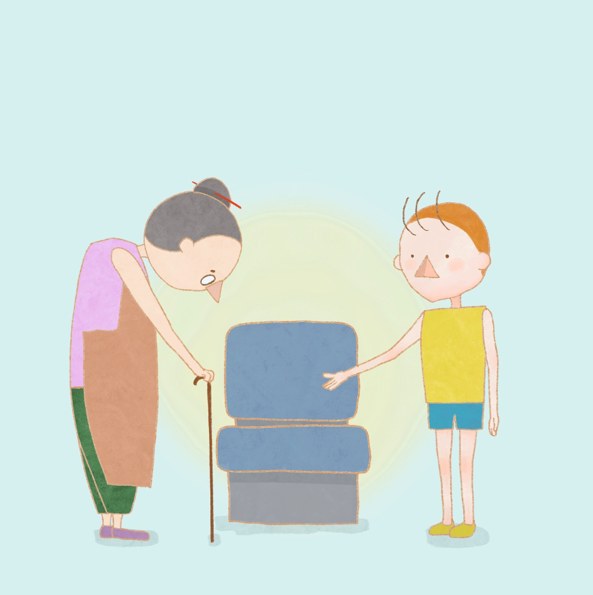
Excuse me, ma’am, please take my seat.
おばあさん、席空いていますよ。どうぞ。Oh, thank you, young man.
お兄ちゃん、ありがとうね。(At home) Nozomi, I gave my seat on the bus to someone carrying heavy bags.
(家で)のぞみお姉ちゃん、バスで重そうな荷物を持っていた人に席をゆずったよ。Good for you, Yusuke! Nasake wa hito no tame narazu – something good will come back to you someday.
勇輔、いいことしたね。情けは人のためならずっていうから、いつかいいことがあるね。“Chan-chan” is the little “ta-da!” sound that closes a comedy skit in Japan.
Example Sentences
- I helped someone in trouble, and later they helped me. Nasake wa hito no tame narazu.
困っている人を助けたら、あとで自分が助けてもらえた。情けは人のためならずだ。 - Nasake wa hito no tame narazu – let’s be kind to everyone.
情けは人のためならずというから、だれにでも親切にしよう。
Similar Japanese Proverbs
- 情けは人のためならず、めぐりめぐって己がためMeguri megutte onore ga tame
The full, original version: “going round and round, it is for yourself.”
Similar Sayings in English
- One good turn deserves another.
- What goes around comes around.
In Korea they say “If you give kindness, kindness comes back,” and in France, “A good deed is never lost.”
Quick Quiz
What is the correct meaning of nasake wa hito no tame narazu?
- A. Kindness spoils people
- B. Kindness to others will come back to you
- C. Never show kindness
Show the answer
The answer is B. “Not for others” means “not only for others” – it helps you, too.
Watch the Lesson (in Japanese)
On my YouTube channel “Kyō kara tsukaeru kotowaza kōza” (Proverbs You Can Use from Today), I explain proverbs with short comedy skits. It’s in Japanese – a fun challenge for learners!
Free Worksheet for Teachers
Teaching Japanese? Download a free printable worksheet for this proverb – with the skit, a fill-in-the-blank, a quiz and a writing task (10 proverbs, A4, with answer key).
Read More
- 30 Japanese Proverbs (Kotowaza) with Meanings – all in one place
- Sannin Yoreba Monju no Chie (三人寄れば文殊の知恵) – Three Heads Make the Wisdom of Monju
- Kaeru no Ko wa Kaeru (蛙の子は蛙) – The Child of a Frog Is a Frog
- Rui wa Tomo o Yobu (類は友をよぶ) – Like Calls to Like
- 情けは人のためならず(日本語の記事)
- ことわざ 目次(250+ proverbs in Japanese)