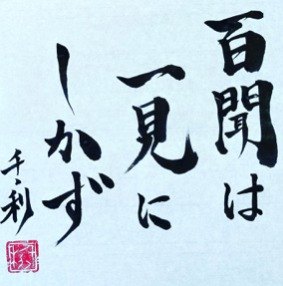
百聞は一見にしかず
hyakubun wa ikken ni shikazu
You can read a hundred reviews of a place – but one visit tells you more. Japanese people say hyakubun wa ikken ni shikazu (百聞は一見にしかず).
I’m Arasen, an elementary school principal and calligrapher in Japan. If you are planning a trip to Japan, this proverb is for you!
Quick Facts
| Japanese | 百聞は一見にしかず |
|---|---|
| Reading | ひゃくぶんはいっけんにしかず |
| Romaji | hyakubun wa ikken ni shikazu |
| Literally | A hundred hearings are not equal to one seeing |
| Meaning | Seeing something yourself is far better than hearing about it. |
| English cousin | Seeing is believing. / A picture is worth a thousand words. |
What Does It Mean?
Even if you hear or are told about something many times, seeing it for yourself just once helps you understand it much better.
It is also a piece of advice: check things with your own eyes.
Word by Word
| 百聞 | hyakubun – hearing a hundred times (hyaku = 100, bun = hearing) |
|---|---|
| は | wa – topic marker |
| 一見 | ikken – seeing once (ichi = 1, ken = seeing) |
| にしかず | ni shikazu – is not as good as (an old, literary expression) |
Where Does It Come From?
The words come from the Book of Han (漢書), an ancient Chinese history. A veteran general, Zhao Chongguo, was asked how to deal with a battle far away. He answered that it was hard to plan from a distance – he would go and see the place himself, draw a map, and then make a plan.
Two thousand years later, his words are still everyday Japanese!
A Word from Arasen

It means that seeing something with your own eyes even once is more reliable than hearing about it a hundred times from others.
Say your friends are talking about a movie. It’s in magazines too, and you think, “Hmm, probably just okay.” Then you actually go to see it – and it’s so wonderful that you’re moved! That happens, right?
Or the opposite: it wasn’t as good as everyone said.
Today, with the internet, we are flooded with information, and it feels like we can judge many things just by hearing about them. But it’s as if people from long ago are advising us: “You won’t know until you see it yourself!”
It’s especially good advice when a Google search makes us feel we already understand.
(Translated from Arasen’s original Japanese.)
How to Use It
A Short Skit
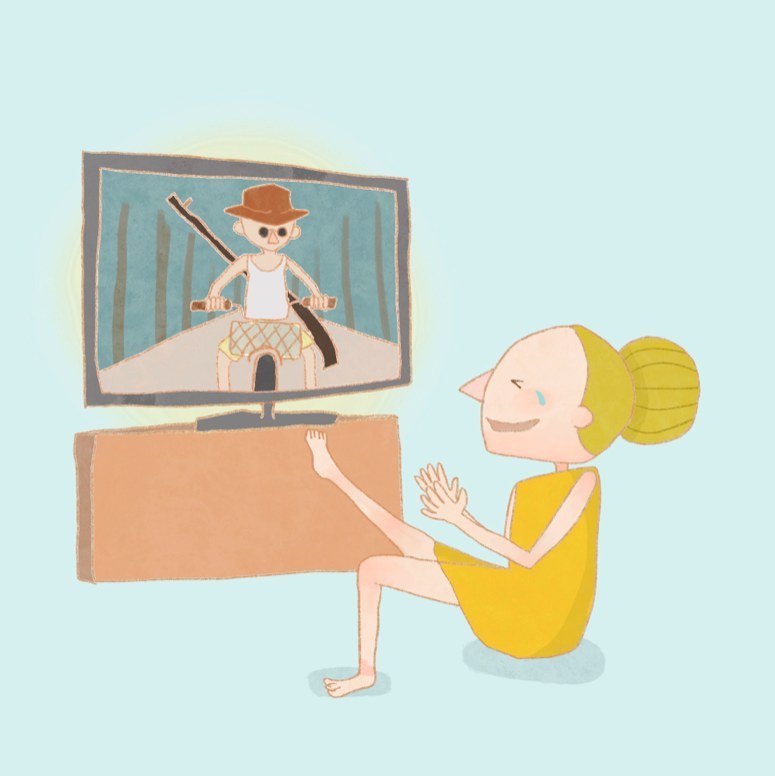
Nozomi, you saw that movie everyone’s talking about, right? How was it?
のぞみちゃん、話題の映画を見たんでしょ。どうやった?Kyoko, it was great! The part where the hero says, “No one has ever seen it!” was the best. I cried. Hyakubun wa ikken ni shikazu – you just have to see it!
今日子、面白かったよ!主人公が『誰も見たことないじゃないか』ってとこ、最高やったわ。泣いてしもた。百聞は一見にしかずだから、とにかく観て欲しいな“Chan-chan” is the little “ta-da!” sound that closes a comedy skit in Japan.
Example Sentences
- I had seen Mt. Fuji in photos many times, but I was amazed by its size when I saw it for real. Hyakubun wa ikken ni shikazu.
写真で何度も見ていた富士山も、実際に見るとその大きさにおどろいた。百聞は一見にしかずだ。 - They say hyakubun wa ikken ni shikazu, so let’s go on a factory tour.
百聞は一見にしかずというから、工場見学に行ってみよう。
Similar Japanese Proverbs
- 論より証拠Ron yori shōko
“Proof rather than argument.” Showing the evidence is clearer than arguing. - 聞いた百より見た一つKiita hyaku yori mita hitotsu
“One thing seen beats a hundred things heard.”
Similar Sayings in English
- Seeing is believing.
- A picture is worth a thousand words.
Many languages share this idea. A Spanish saying goes “Better to see once than to hear a hundred times,” and a Romanian one says “Believe nothing until you see it with your own eyes.”
Quick Quiz
What does shikazu (しかず) mean?
- A. it can’t be helped
- B. is not as good as
- C. does not know
Show the answer
The answer is B. is not as good as. Hearing a hundred times is not as good as seeing once.
Watch the Lesson (in Japanese)
On my YouTube channel “Kyō kara tsukaeru kotowaza kōza” (Proverbs You Can Use from Today), I explain proverbs with short comedy skits. It’s in Japanese – a fun challenge for learners!
Free Worksheet for Teachers
Teaching Japanese? Download a free printable worksheet for this proverb – with the skit, a fill-in-the-blank, a quiz and a writing task (10 proverbs, A4, with answer key).