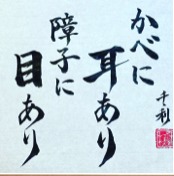
壁に耳あり障子に目あり
kabe ni mimi ari, shōji ni me ari
English says “walls have ears.” Japanese goes one step further and adds eyes in the paper sliding doors: kabe ni mimi ari, shōji ni me ari (壁に耳あり障子に目あり).
I’m Arasen, an elementary school principal and calligrapher in Japan. Once you know how thin a Japanese shōji is, this proverb makes perfect sense.
Quick Facts
| Japanese | 壁に耳あり障子に目あり |
|---|---|
| Reading | かべにみみありしょうじにめあり |
| Romaji | kabe ni mimi ari, shōji ni me ari |
| Literally | Ears in the wall, eyes in the shōji |
| Meaning | Secrets leak easily – someone may be listening. |
| Shōji | A Japanese sliding door: a wooden frame covered with thin paper |
| English cousin | Walls have ears. |
What Does It Mean?
Secret talks and hidden things easily get out to other people.
Word by Word
| 壁に耳あり | kabe ni mimi ari – there are ears in the wall |
|---|---|
| 障子 | shōji – a paper sliding door |
| に目あり | ni me ari – there are eyes in it |
Where Does It Come From?
Someone might be pressing an ear to the wall to listen in – or poking a little hole in the paper of the shōji to peek through.
“Walls have ears” exists in many languages – German, French, Italian, Russian. The Netherlands even says “The forest has ears and the field has eyes.”
A Word from Arasen

Even if you try to keep a secret, you never know who’s listening or watching. Secrets leak easily – that’s the meaning.
You think no one is around and whisper a secret – but someone has an ear to the wall, or has poked a small hole in the shōji to peek. That’s the advice from people long ago.
Secret talks make us want to listen and peek, don’t they? But watch out! Someone is surely listening.
(Translated from Arasen’s original Japanese.)
How to Use It
A Short Skit
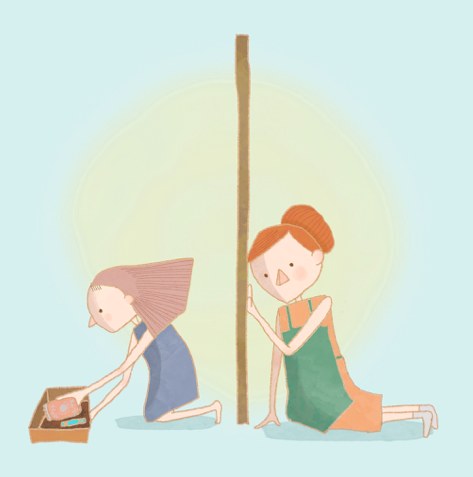
Kanae! Kanae!
かなえ!かなえ!What, Nozomi?
何?のぞみお姉ちゃんI saw Mom hiding snacks in the upstairs closet. To teach her that kabe ni mimi ari, shōji ni me ari, I’m going to secretly eat them now. Hee hee.
お母さんが、2階の押し入れにお菓子をかくしているのを見たのよ。壁に耳あり障子に目ありということを教えるために、今からこっそり食べようと思うのよ。うふふふ。Nozomi, you have such an evil face right now.
のぞみお姉ちゃんめちゃくちゃ悪い顔をしてるよ“Chan-chan” is the little “ta-da!” sound that closes a comedy skit in Japan.
Example Sentences
- Don’t say bad things about friends in the hallway. Kabe ni mimi ari, shōji ni me ari.
ろうかで友だちの悪口を言うのはやめよう。壁に耳あり障子に目ありだ。 - Thinking “kabe ni mimi ari”, we told the secret in a small voice.
秘密の話は、壁に耳あり障子に目ありと思って、小さな声で話した。
Similar Sayings in English
- Walls have ears.
- Fields have eyes, and woods have ears.
Indonesia has a lovely version: “When you talk by day, look around; when you talk by night, listen carefully.”
Quick Quiz
What does kabe ni mimi ari, shōji ni me ari mean?
- A. Build your house strongly
- B. Listen carefully to others
- C. Be careful – secrets leak easily
Show the answer
The answer is C. You never know who might be listening or watching.
Watch the Lesson (in Japanese)
On my YouTube channel “Kyō kara tsukaeru kotowaza kōza” (Proverbs You Can Use from Today), I explain proverbs with short comedy skits. It’s in Japanese – a fun challenge for learners!
Free Worksheet for Teachers
Teaching Japanese? Download a free printable worksheet for this proverb – with the skit, a fill-in-the-blank, a quiz and a writing task (10 proverbs, A4, with answer key).
Read More
- 50 Japanese Proverbs (Kotowaza) with Meanings – all in one place
- Atama Kakushite Shiri Kakusazu (頭かくして尻かくさず) – Hide Your Head, Leave Your Tail Showing
- Usotsuki wa Dorobō no Hajimari (嘘つきは泥棒の始まり) – A Liar Is a Thief in the Making
- Kusai Mono ni Futa o Suru (くさいものにふたをする) – Put a Lid on What Stinks
- 壁に耳あり障子に目あり(日本語の記事)
- ことわざ 目次(250+ proverbs in Japanese)